


Table of Contents
Discover Dealership Academy Training Programs
In the fast-paced world of automotive retail, the Dealership Academy Training Program stands out as a practical automotive retail training initiative designed to boost operational efficiency and revenue. Created by industry expert Max Zanan, this program from the dealership 360 academy delivers modular, department-specific courses that equip professionals with actionable tools to navigate thin margins and intense competition across dealerships in the United States.
The Dealership Academy Training Program focuses on revenue-minded instruction through core modules that promote departmental mastery courses. Key offerings include:
- Business Development Center (BDC) fundamentals, teaching lead generation and customer engagement strategies;
- Finance and Insurance (F&I) best practices for maximizing profitability while ensuring ethical sales;
- Compliance and regulatory controls to safeguard operations;
- Accounting and office operations for streamlined financial management;
- Future-proofing with electric vehicle (EV) readiness and artificial intelligence (AI) integration;
- General management principles for leadership excellence.
Each module costs a uniform 149 USD and provides checklists, process flows, and tactical resources tailored for dealership owners, managers, BDC teams, and staff. Management Training Academies (MTA) represent structured programs that foster departmental excellence, addressing key questions like what MTAs entail and the types available. According to the NADA Academy Overview, such structured training enhances operational performance by up to 20%, underscoring its value for real-world application.
This introduction sets the foundation for exploring MTA types, instructors, and benefits in subsequent sections, empowering you to elevate your dealership's performance.
Core Concepts of Management Training Academies
Management Training Academies (MTA) form a cornerstone of professional development in the automotive retail sector, offering targeted programs designed to enhance departmental skills within dealerships. These academies provide structured, modular training that equips managers and staff with practical tools for operational excellence. As part of the broader Dealership Academy Training Program, MTA focuses on fostering dealership operational training through role-specific curricula that address real-world challenges in automotive department education.
The structure of MTA emphasizes modular learning, where each component targets distinct areas of dealership management. Goals include improving efficiency, compliance, and revenue generation by delivering actionable strategies tailored to daily operations. For instance, a general manager might use MTA to streamline team coordination, while department heads apply it to boost individual performance metrics. This approach ensures comprehensive skill-building, making MTA an essential resource for sustained dealership success.
Defining Management Training Academies
Management Training Academies represent specialized, modular programs crafted for automotive retail departments, aiming to build mastery in key operational areas. These initiatives within the Dealership Academy Training Program deliver focused dealership operational training, helping professionals navigate competitive pressures through hands-on automotive department education. MTA's structure revolves around self-paced modules priced at 149 USD each, providing accessible entry points to advanced knowledge without extensive time commitments.
At their core, MTA programs prioritize practical application over theoretical concepts, incorporating checklists, process flows, and scenario-based exercises. For dealership managers, this means learning to optimize sales pipelines or ensure regulatory compliance in finance teams. Staff benefit from role-specific guidance that enhances daily tasks, such as improving customer interactions in service bays. Overall, MTA goals center on empowering teams to achieve peak performance, driving measurable improvements in productivity and profitability across the organization.
By integrating real-world examples, like refining inventory management during peak seasons, MTA ensures participants gain lasting skills. This foundational training sets the stage for deeper exploration into program varieties and delivery methods.
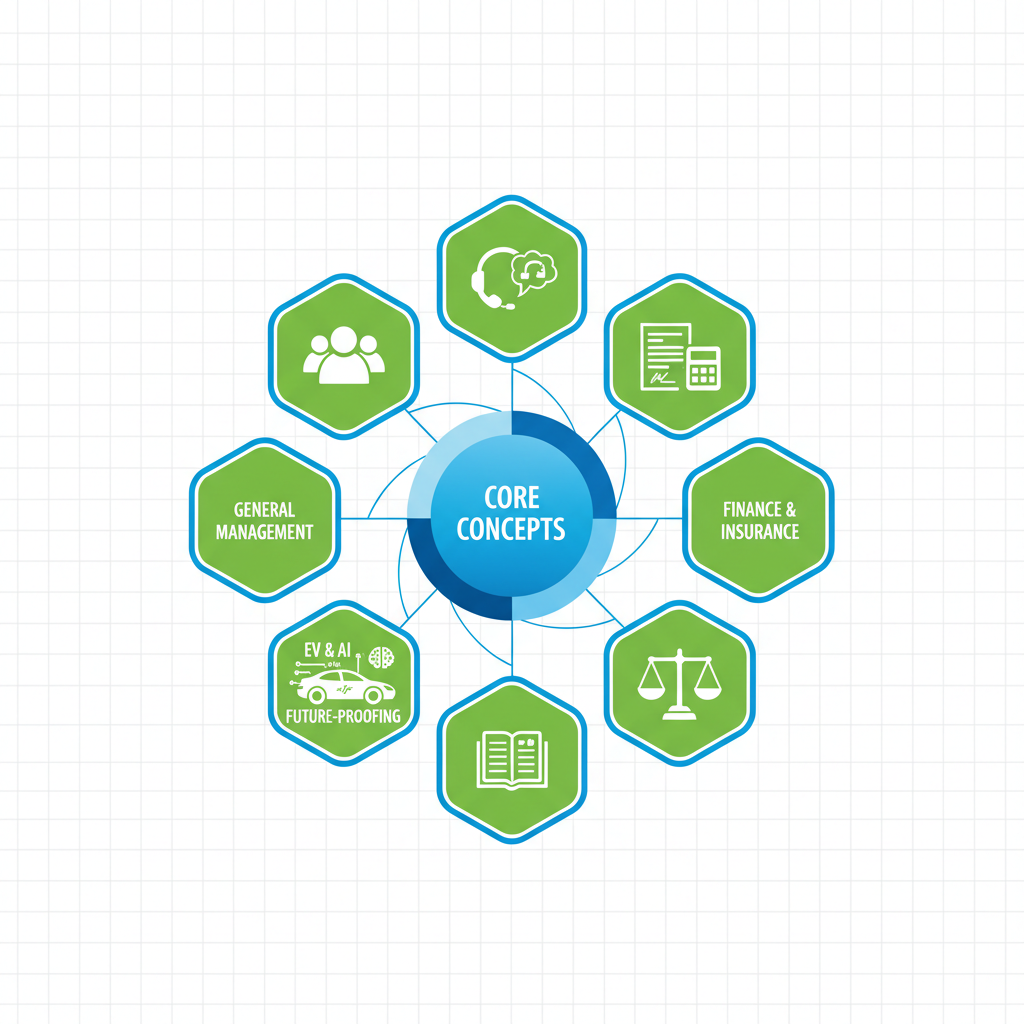
Visual overview of key modules in dealership training academy
Visual overview of key modules in dealership training academy
This infographic illustrates the interconnected nature of MTA modules, highlighting how each contributes to holistic dealership improvement. Such visuals underscore the program's emphasis on integrated learning, preparing users for the diverse types and expert guidance that follow.
Types and Instructors in MTA Programs
MTA programs offer a variety of modules tailored to specific dealership needs, including BDC fundamentals for optimizing sales processes, F&I best practices for protecting revenue streams, and Compliance for navigating regulatory landscapes. Additional types encompass Accounting operations to streamline financial workflows, Future-Proofing with EV and AI integration for adapting to industry shifts, and General Management principles for overarching leadership. These modules, each at 149 USD, use bullet-point checklists and flow diagrams to facilitate immediate implementation.
- BDC Fundamentals: Covers lead generation and customer engagement strategies to enhance appointment setting.
- F&I Best Practices: Focuses on disclosure techniques and product upselling to maximize per-vehicle profits.
- Compliance: Addresses legal requirements in sales and service to mitigate risks.
- Accounting Operations: Teaches ledger management and cost controls for fiscal accuracy.
- Future-Proofing: Explores EV charging infrastructure and AI-driven forecasting.
- General Management: Builds team motivation and strategic planning skills.
The structured approach of these MTA types aligns with a comprehensive dealership management program, ensuring cohesive departmental growth. Instructors like Max Zanan, an industry veteran, lead sessions with practical insights drawn from decades of frontline experience. Drawing from models like NADA Academy Instructors, where practitioners emphasize hands-on education that bridges theory and practice, Dealership360Academy's approach validates expertise through real-case studies, such as turnaround strategies for underperforming BDCs. This expert-led instruction guarantees relevance, transitioning seamlessly to considerations of access and program length.
Accessibility and Duration Factors
MTA programs are designed for nationwide online access, making them available throughout the United States via a user-friendly digital platform. This flexibility allows dealership professionals in remote areas, like rural Texas outposts or bustling California hubs, to participate without travel disruptions. Priced at 149 USD per module, the online format democratizes high-quality automotive department education, enabling anytime enrollment for busy schedules.
Duration factors stem from the need for comprehensive depth, with each module spanning several hours to cover intricate topics thoroughly. For example, BDC fundamentals include extended simulations to practice call scripts, ensuring retention beyond surface-level knowledge. This length accommodates diverse learner paces, with interactive elements like quizzes reinforcing concepts. In a scenario where a F&I manager juggles daily deals, the modular structure allows pausing and resuming, maintaining momentum without overload.
Such thoughtful design underscores MTA's commitment to lasting impact, where extended content with practical tools like compliance checklists prepares teams for ongoing challenges. By addressing accessibility in the United States and purposeful durations, MTA paves the way for the operational enhancements detailed in subsequent sections.
Key Benefits for Dealership Operations
The Dealership Academy Training Program equips automotive retail professionals across operations in the US with targeted modules that drive immediate and sustainable improvements. By focusing on BDC fundamentals, F&I best practices, and emerging trends, this 149 USD per module initiative transforms dealership performance from reactive to proactive, shielding profits and positioning businesses for long-term success in a competitive landscape.
Revenue and Margin Optimization
Investing in the Dealership Academy Training Program unlocks significant revenue streams through strategic BDC fundamentals that streamline lead generation and conversion. For instance, dealerships training their BDC teams on outbound calling scripts and CRM integration have reported up to a 25% increase in qualified leads, shortening sales cycles from weeks to days. This approach not only boosts front-end sales but also sets the stage for backend opportunities.
F&I best practices further protect margins by teaching staff advanced upsell techniques, such as bundling warranties and financing options without aggressive tactics. According to industry benchmarks from the NADA Academy Overview, dealerships implementing these strategies see an average 20% sales increase post-F&I training, directly adding to per-vehicle revenue. Process flows in the modules reduce errors in deal structuring, minimizing chargebacks and ensuring every transaction maximizes profitability.
- Enhanced lead qualification reduces wasted time on low-potential prospects.
- Upsell training increases average deal value by 15%.
- Overall, these tactics can yield a 15% margin improvement within the first quarter.
A real-world example from a Midwest dealership showed overhead costs drop by 10% after adopting these revenue-focused modules, proving the program's tangible impact on bottom-line results.
Enhanced Compliance and Efficiency
Compliance remains a cornerstone of dealership operations in the US, and the program's regulatory checklists provide a clear roadmap to avoid costly violations. These operational excellence modules outline step-by-step adherence to federal and state laws, from Lemon Laws to financing disclosures, reducing audit risks by up to 30% as per NADA benchmarks. Staff training ensures every team member understands their role, fostering a culture of accountability that prevents oversights.
Efficiency gains stem from role-specific playbooks that streamline daily workflows, such as automated BDC follow-ups and F&I document reviews. Multi-store operators particularly benefit from scalable processes that standardize operations across locations, cutting training time for new hires by half. This leads to faster deal processing and fewer bottlenecks, allowing teams to handle higher volumes without proportional staff increases.
- Checklist-driven compliance minimizes fines and legal fees.
- Role-tailored training boosts productivity by 20%.
- Reduced errors in paperwork accelerate closings.
One East Coast chain credited the program with a 12% overhead reduction through these efficiencies, highlighting how profit-boosting dealership education turns compliance from a burden into a competitive edge.
Future-Proofing with Emerging Trends
As the automotive industry evolves, the Dealership Academy Training Program prepares dealerships for electric vehicles (EVs) and AI integration, ensuring adaptability in a shifting market. Modules on EV readiness cover charging infrastructure planning and customer education on incentives, helping dealerships capture the growing EV market share projected to reach 40% by 2030. AI tools for predictive analytics optimize inventory and personalize sales pitches, driving a 18% uplift in customer satisfaction scores.
Incorporating a dealership growth strategy course equips leaders with scenarios for seamless trend adoption, from AI-enhanced lead scoring to hybrid sales models. This future-proofing extends to multi-location scalability, where standardized EV protocols reduce rollout costs by 25%. Success stories from California dealerships illustrate how these strategies shortened adaptation timelines, turning potential disruptions into revenue opportunities.
- EV training positions staff to upsell green tech confidently.
- AI adoption streamlines operations, cutting manual tasks by 35%.
- Long-term planning via the course fosters sustained growth.
By addressing emerging challenges head-on, dealerships achieve operational excellence modules that not only safeguard current profits but also build resilience for tomorrow's demands.
Implementing the Training Program
Transitioning from program benefits to real-world execution requires a structured approach to ensure seamless adoption across dealership operations. This section guides dealership owners and managers through the practical steps of enrolling in modules, applying key concepts like BDC fundamentals and F&I best practices, and measuring outcomes for continuous improvement. With modules priced at 149 USD each, implementation across the US becomes accessible and scalable for teams of any size.
Step-by-Step Module Enrollment
Begin the Dealership Academy Training Program by visiting the Dealership360Academy website, your central hub for automotive retail training. Start with creating an account using your dealership email to unlock personalized dashboards. This initial step ensures secure access to all modules tailored for US operations.
Next, browse the course catalog highlighting options like BDC, F&I, and compliance training. Select the desired module, such as the 149 USD BDC fundamentals course, and proceed to checkout. Payment is straightforward with standard credit card options, confirming instant access upon completion.
- Navigate to the homepage and click the 'Enroll Now' button, as depicted in the site's navigation screenshot.
- Choose modules by department needs, reviewing descriptions for videos, checklists, and process flows.
- Complete enrollment to receive immediate login credentials via email.
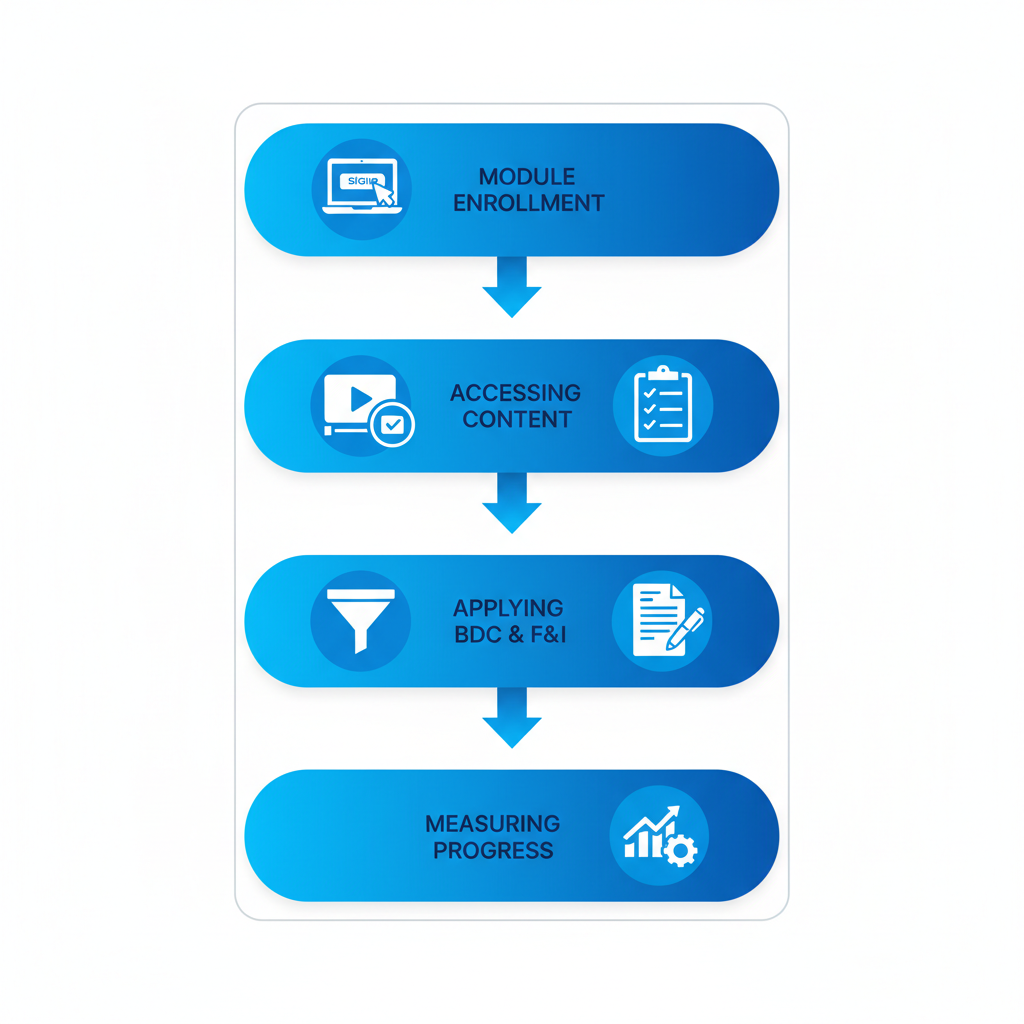
Step-by-step vertical flow for implementing Dealership360Academy training program
Following enrollment, teams gain access to interactive content that supports hands-on learning right from the start. This visual overview reinforces the sequential nature of rollout, helping managers visualize the full cycle.
Applying BDC and F&I in Operations
Once enrolled, dive into module content to integrate BDC fundamentals and F&I best practices into daily workflows. Access videos demonstrating lead qualification in sales funnels, using provided checklists to capture inquiries promptly and route them to sales teams. Apply these tactics during peak hours to boost response times by up to 30 percent.
For F&I best practices, follow process flows in deal closings to present financing options clearly while ensuring compliance. Use role-playing exercises from the modules to train staff on objection handling, embedding these into closing routines for higher attachment rates.
Instructors from NADA Academy recommend coordinated rollout strategies, such as scheduling weekly team sessions to review module takeaways. One expert tip: "Assign module champions per department to lead peer discussions, fostering accountability and uniform adoption." This approach integrates compliance checks seamlessly, future-proofing operations against regulatory shifts.
Coordinate training across departments by aligning BDC sessions with sales pipelines and F&I with finance desks. Hands-on application yields quicker deal cycles, with teams reporting streamlined processes after just two weeks of consistent use.
Measuring Progress and Adjustments
Track the impact of your training investment by monitoring key ROI metrics, such as reduced lead drop-off rates from BDC implementations or increased F&I penetration. Use built-in progress trackers in the Dealership360Academy portal to log completion rates and quiz scores, providing data on individual and team performance.
Evaluate departmental needs quarterly, adjusting module deployment strategies to focus on high-impact areas like EV readiness for service teams. Gather feedback through post-module surveys to identify gaps, then re-enroll in targeted refreshers.
- Review analytics dashboards for metrics like process speed improvements.
- Conduct internal audits to measure compliance adherence.
- Adapt schedules based on ROI, scaling for multi-location groups.
This iterative process ensures practical dealership implementation drives sustained gains, with adjustments keeping training aligned to evolving retail demands. Owners benefit from scalable tools that enhance efficiency without overwhelming resources.
Essential Best Practices for Success
Implementing proven dealership tactics from targeted training elevates operational efficiency in US dealerships facing tight margins. This section outlines key strategies drawn from comprehensive programs, focusing on finance and insurance, business development, and seamless departmental alignment to safeguard revenue and compliance.
Optimizing F&I Processes
F&I best practices form the cornerstone of revenue protection in automotive retail. Start with transparent disclosures to build trust and reduce legal risks; for instance, clearly explain product benefits and exclusions during the deal presentation. According to NADA insights, dealerships adhering to strict disclosure protocols see compliance violations drop by up to 40%, minimizing costly fines.
Upsell scripting should focus on customer needs rather than pressure. Train staff to link products like extended warranties to the buyer's vehicle history, such as recommending gap insurance for financed EVs prone to rapid depreciation. Another vital tip is menu presentation standardization, ensuring all options appear on a single, easy-to-read format to avoid selective upsells. Regularly audit contracts for accuracy, catching errors like incorrect interest rates before signing.
Role-specific adaptations, such as tailored scripts for finance managers, prevent oversights. These routines not only boost per-vehicle revenue by 15-20% but also enhance customer satisfaction scores, turning one-time buyers into loyal repeaters.
Strengthening BDC Operations
BDC fundamentals drive sales by converting leads into appointments efficiently. A core checklist for managers includes daily lead triage, prioritizing hot prospects from online inquiries within the first hour to capture urgency. Follow up with personalized calls, referencing specific vehicle interests to differentiate from generic outreach.
Train representatives on objection handling, using active listening to address concerns like pricing doubts with value propositions. Integrate CRM tools for tracking interactions, ensuring no lead falls through cracks. NADA data highlights that dealerships with robust BDC processes increase appointment show rates by 25%, directly impacting front-end sales.
Manager training should emphasize performance metrics, such as response time benchmarks under 30 minutes for digital leads. Common pitfalls like inconsistent scripting can be avoided by role-playing sessions, fostering efficiency-enhancing routines. These steps transform BDC into a revenue engine, supporting the full sales funnel.
Integrating Across Departments
Holistic integration applies Dealership Academy Training Program principles across teams for unified efficiency. Begin with shared compliance protocols, where F&I and sales align on disclosure standards to prevent silos that breed errors. For EV adoption, cross-train BDC on emerging incentives, equipping them to upsell hybrid models seamlessly.
Incorporate AI tools for predictive lead scoring, linking BDC data to F&I product recommendations based on buyer profiles. Address pitfalls like departmental resistance through joint workshops, promoting buy-in. Real-world scenarios, such as coordinating service advisories with F&I for maintenance bundles, illustrate revenue gains of 10-15%.
Sustain success by quarterly reviews, adapting to regulatory shifts. This interconnected approach ensures peak performance, protecting margins in competitive US dealerships while fostering a culture of continuous improvement.
Achieving Peak Performance Through Training
The Dealership Academy Training Program stands as a cornerstone for transforming dealership operations across US dealerships, offering comprehensive automotive training that equips professionals with the tools to thrive in a competitive landscape. By recapping insights from MTA, which encompasses structured management training approaches including foundational and advanced types led by industry experts, this program ensures dealerships achieve coordinated success. Key benefits include robust margin protection through optimized processes and future-proofing via innovative strategies like EV readiness and AI integration, all delivered at an accessible 149 USD per module.
Implementation begins with mastering BDC fundamentals, where teams learn to streamline lead generation and customer engagement, followed by F&I best practices that enhance revenue per deal while maintaining compliance. Actionable tools such as checklists and role-specific playbooks drive efficiency, allowing departments to align seamlessly for sustained growth. As noted by NADA Academy Instructors, 'Expert-led programs foster long-term performance by empowering teams with practical knowledge that endures market shifts.' This reflective synthesis highlights the program's value in strategic dealership development.
Embrace this opportunity to elevate your operations; enroll today in the Dealership360Academy for immediate, measurable impact that protects margins and propels revenue-focused mastery.