

Table of Contents
Digital Dealership Training Program Overview
In the competitive landscape of automotive retail, dealerships grapple with razor-thin margins, evolving customer expectations, and rapid digital shifts. Traditional in-person events like the NADA Show 2026, featuring sessions on sales strategies and compliance, demand significant time and travel. Yet, an online automotive education initiative like the Digital Dealership Training Program offers a flexible path to operational excellence without those constraints.
The dealership 360 academy program delivers department-focused retail training through modular courses crafted by industry expert Max Zanan. Priced at 149 USD per module, it targets owners, managers, and staff across the United States, providing tactical, revenue-driven instruction. Core modules cover general management principles, dealership BDC training for lead generation, automotive F&I training to maximize profits, compliance controls, accounting operations, and EV readiness with AI integration. Hands-on playbooks and process flows equip teams for real-world scenarios, such as streamlining BDC calls to boost appointments or ensuring F&I compliance amid regulatory changes. This complements NADA's broader resources by offering deeper, department-specific depth.
How can digital training improve dealership performance? By fostering efficiency and sales through practical skills, this program sets the foundation for navigating digital transformation. Subsequent sections explore the automotive retail landscape and detailed benefits to guide your implementation.
Understanding Digital Dealership Training
Digital dealership training represents a shift toward online, modular education that equips automotive retail professionals with practical skills to thrive in a competitive landscape. These programs address the unique demands of modern dealerships in the United States, focusing on revenue-driven strategies rather than outdated theoretical approaches.
Core Components of Modern Dealership Education
The Digital Dealership Training Program forms the backbone of contemporary automotive education, offering structured modules tailored to key operational areas. At its core, dealership BDC training emphasizes lead generation and customer engagement through digital channels, teaching teams to convert online inquiries into showroom visits efficiently. This module equips business development centers with tools for managing digital pipelines, ensuring no opportunity slips through in an era of virtual shopping.
Similarly, automotive F&I training targets finance and insurance departments, optimizing profit centers by streamlining deal presentations and compliance protocols. Participants learn to upsell products like extended warranties while navigating regulatory requirements, directly boosting per-vehicle revenue. Emerging components, such as EV readiness and AI integration, prepare staff for future trends, including electric vehicle sales processes and data-driven decision-making.
These elements combine to create virtual automotive skill-building experiences that translate theory into actionable playbooks. For instance, a mid-sized dealership in Texas implemented BDC strategies from such training, increasing lead response times by 40 percent within months.
Challenges in Automotive Retail Training
Automotive retail faces persistent hurdles, including razor-thin margins and the rapid shift to digital operations, which traditional training often fails to address adequately. Dealerships in the United States grapple with intense competition from online car buyers, where slow adaptation to e-commerce tools leads to lost sales. Regulatory compliance adds another layer, as evolving laws on data privacy and financing demand constant upskilling for F&I teams.
| Aspect | Digital Training (e.g., Dealership360Academy) | Traditional Training (e.g., NADA) |
|---|---|---|
| Accessibility | On-demand, modular access from anywhere in the United States | Limited to scheduled in-person or virtual sessions |
| Flexibility | Self-paced, department-specific modules at 149 USD each | Fixed schedules, often group-based with attendance mandates |
| Content Focus | Practical, revenue-minded playbooks with EV/AI integration | Broad industry knowledge, emphasizing foundational theory |
| Delivery Method | Online videos, checklists, and role-specific guides | In-person seminars, webinars, and consulting sessions |
| Cost Structure | Fixed per-module pricing without travel expenses | Higher fees per attendee, plus travel and accommodation |
| Scalability | Ideal for multi-store operators and remote teams | Challenging for multi-location groups due to logistics |
Role of Online Platforms in Dealer Development
Online platforms revolutionize dealer development by delivering content directly to staff across the United States, eliminating barriers posed by location or availability. A key advantage lies in their scalability for multi-store operators, where standardized training reduces variability in performance.
The training academy for car dealership owners exemplifies this approach, providing tactical guides that enhance departmental coordination.
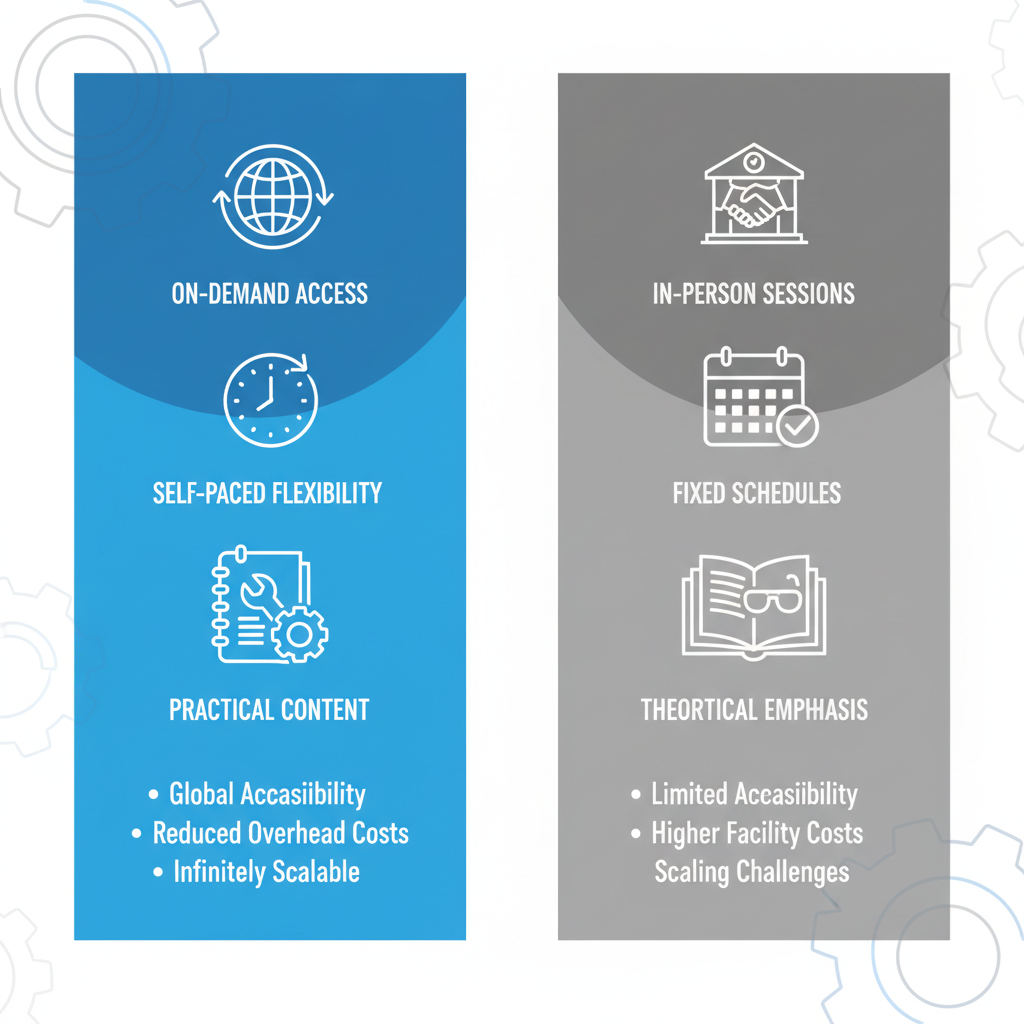
Side-by-side comparison of digital vs traditional dealership training approaches
Key Benefits of Digital Training for Dealerships
Enhancing Operational Efficiency Across Departments
The Digital Dealership Training Program offers dealerships in the United States a powerful way to streamline daily operations through targeted modules. In particular, dealership BDC training equips business development centers with tools to optimize lead management education for dealers, reducing response times and improving follow-up processes.
- Lead Response Optimization: Cuts average wait times by 30% via automated protocols.
- Error Reduction in F&I: Digital tools minimize compliance risks and speed up financing approvals.
Boosting Revenue Through Specialized Skills
Specialized training within the program directly contributes to higher profits by enhancing skills in key revenue-generating areas. Automotive F&I training focuses on advanced sales techniques and product knowledge, enabling finance managers to upsell protection plans and financing options more effectively.
- Upsell Proficiency: Boosts average F&I revenue per deal by emphasizing value-added products.
- Compliance Confidence: Reduces audit penalties, preserving profit margins.
Preparing for Future Trends Like EV Adoption
As the automotive industry shifts toward electrification and smart technologies, the program's modules on future-proofing prepare dealerships for long-term success. Training in EV readiness covers battery management, charging infrastructure basics, and customer education on electric vehicles.
Incorporating a dealership growth strategy course enhances these efforts by providing holistic planning tools.
- EV Sales Training: Builds expertise to capture growing market share.
- AI Efficiency Tools: Streamlines operations for proactive decision-making.
How the Digital Dealership Training Program Works
Modular Structure and Access
Enrollment in the Digital Dealership Training Program begins with a straightforward online registration process, allowing immediate access to individual modules priced at 149 USD each. Users navigate the platform via a user-friendly dashboard, where step-by-step dealer skill modules are organized progressively.
Delivery Methods and Tools
Delivered entirely online, the program utilizes practical auto retail e-learning formats to ensure engagement and retention. Core tools include high-quality video lessons that demonstrate real scenarios, supplemented by downloadable playbooks and checklists for immediate reference.
Implementation in Daily Operations
Applying the training translates directly to dealership workflows, starting with integration into BDC and F&I teams. For dealership BDC training, modules equip agents with scripts and response protocols to optimize lead handling. This hands-on application not only addresses how to grow car dealership business but also supports broader digital transitions.
Best Practices for Implementing Dealership Training
Integrating Training into Team Workflows
To maximize the impact of the dealership 360 academy online course, start by scheduling dedicated sessions that fit around peak sales hours. Assign roles based on department needs, such as BDC agents handling lead follow-up modules and F&I managers focusing on compliance training.
Measuring Success and ROI
Tracking the outcomes of automotive F&I training and similar programs is essential for justifying investments and refining strategies. The following table compares typical pre- and post-training benchmarks, highlighting improvements from structured digital programs:
| Metric | Pre-Training Average | Post-Training with Digital Program |
|---|---|---|
| BDC Lead Conversion Rate | 15-20% | 25-35% (10-15% uplift) |
| F&I Profit per Vehicle | $1,200 | $1,500-$1,560 (25-30% increase) |
| Compliance Audit Scores | 60-70% | 85-95% (Improved by 40%) |
| Staff Training Completion | 50% | 90%+ |
| EV Sales Readiness | Basic knowledge | Advanced knowledge with practical tools |
| Overall Operational Efficiency | Standard workflow | 15-25% time savings |
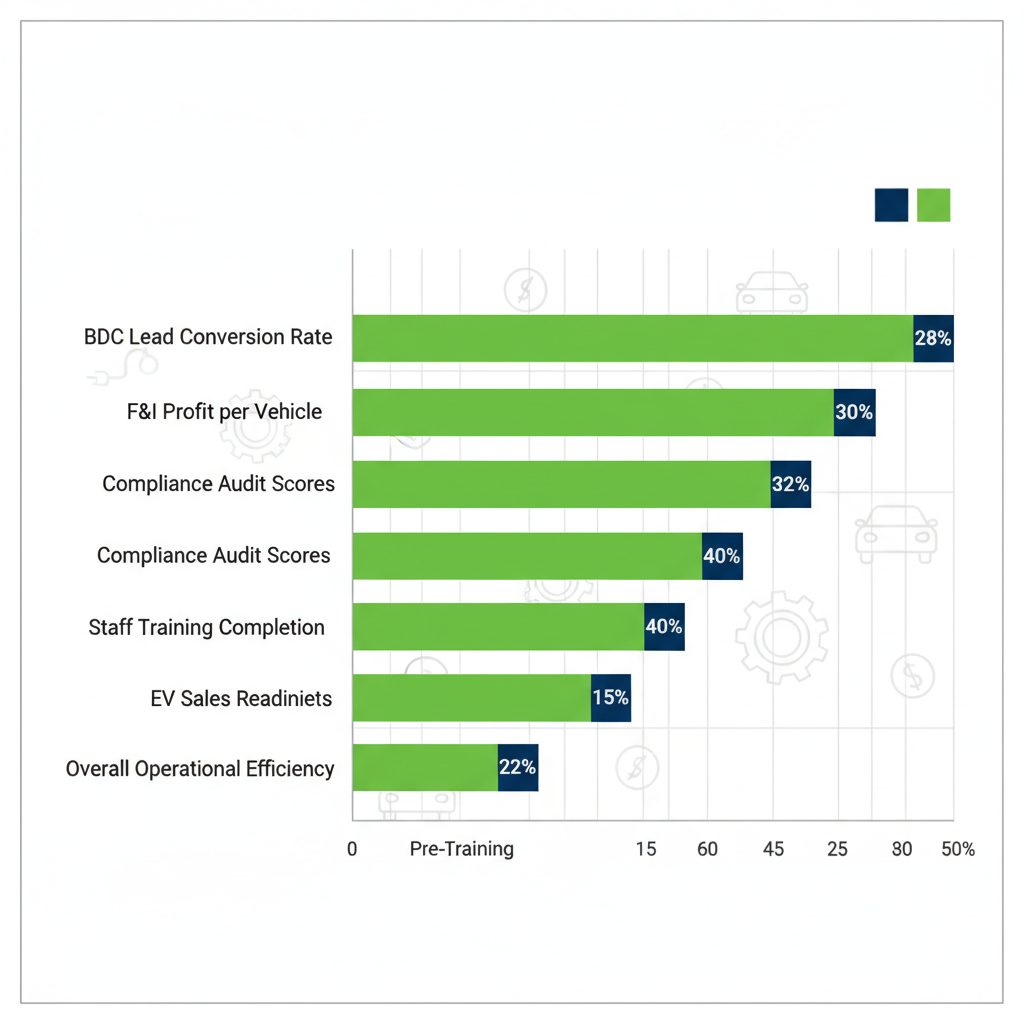
Pre- and post-training metrics visualization for enhanced dealership performance
Overcoming Common Implementation Challenges
Resistance from staff often stems from perceived time burdens, but addressing it head-on with dealership BDC training tailored to quick wins can shift mindsets. For time constraints in busy US dealerships, opt for micro-learning formats, like 15-minute videos, integrated into downtime.
Maximizing Dealership Potential Through Digital Training
In the competitive landscape of automotive retail, the Digital Dealership Training Program emerges as a pivotal tool for US dealerships seeking to elevate operations. This program delivers targeted modules that address critical areas, fostering a seamless shift toward digital efficiency and enhanced revenue streams.