

Table of Contents
Enhancing Dealership Success Through Performance Improvement Training
The automotive industry faces rapid changes, from shifting consumer preferences toward electric vehicles to stringent regulatory demands and AI-driven sales tools. Dealership Performance Improvement Training emerges as a vital strategy to navigate these pressures, helping operations thrive amid thin margins and fierce competition. Owners and managers often struggle with coordinating departments like sales and service, leading to lost revenue opportunities.
This training targets key roles including dealership owners, general managers, F&I managers, BDC teams, and service advisors, providing tailored automotive retail enhancement programs that build skills for real-world scenarios, such as transitioning to EV sales. Core components cover BDC training for lead generation, F&I training for maximizing revenue per vehicle, compliance strategies, office operations, and future-proofing with EV readiness and AI integration. As detailed in The Complete Guide to Dealership Training Programs, such dealer operational optimization courses enhance fixed operations and boost customer retention by up to 20 percent, driving profitability and ensuring regulatory adherence.
Dealership360Academy, a training academy for car dealership owners, offers these modular courses at an affordable 149 USD each, empowering teams with practical checklists and processes. Explore how these programs elevate efficiency in the sections ahead, starting with foundational principles for sustained success.
Key Components of Dealership Training Programs
Dealership Performance Improvement Training forms the backbone of operational excellence in automotive retail, addressing departmental silos through targeted modules. These programs equip teams with tools to boost revenue, ensure compliance, and adapt to industry shifts. By focusing on specialized areas like F&I training and BDC training, dealerships can achieve measurable gains in efficiency and customer satisfaction.
Exploring F&I Training Essentials
F&I training centers on equipping finance managers with skills to sell finance and insurance products effectively while navigating legal requirements. This module emphasizes turning back-end deals into profit centers, with a focus on product knowledge, objection handling, and ethical sales practices. In essence, it transforms routine transactions into opportunities for added value, ensuring deals close smoothly and profitably.
Key features include compliance protocols to avoid penalties, menu-selling techniques for product presentation, and data-driven strategies for profit optimization. Trainees learn to integrate digital tools for quick approvals and customize offerings based on customer profiles. Practical checklists guide role-specific processes, such as pre-delivery audits and contract reviews, drawing from industry best practices that report up to 20% profit increases in F&I departments. These elements create a structured approach to handling upsells during vehicle sales.
For example, a finance manager might use role-play scenarios to practice explaining extended warranties, leading to higher attachment rates. Another application involves auditing deals for TCPA compliance, preventing costly fines. These real-world tactics make F&I training indispensable for revenue growth.
Mastering BDC Training Fundamentals
BDC training builds the foundation for a dealership's Business Development Center, teaching staff to manage leads, nurture prospects, and drive appointments. It covers inbound and outbound strategies to convert inquiries into showroom visits, optimizing the customer funnel from initial contact to sale. This training shifts BDC from reactive support to proactive revenue generation.
Core processes involve CRM integration for lead tracking, scripting for phone and email outreach, and metrics monitoring for performance tweaks. Participants receive checklists for daily workflows, like prioritizing hot leads and following up within 24 hours, which tie into fixed operations for seamless handoffs to sales teams. Best practices highlight efficiency gains, such as 30% appointment increases through structured follow-ups, fostering collaboration across departments.
In practice, a BDC agent applies these fundamentals by segmenting leads into nurture campaigns, resulting in quicker response times. Dealerships often see improved CSI scores from consistent engagement. This hands-on focus ensures BDC teams contribute directly to sales volume.
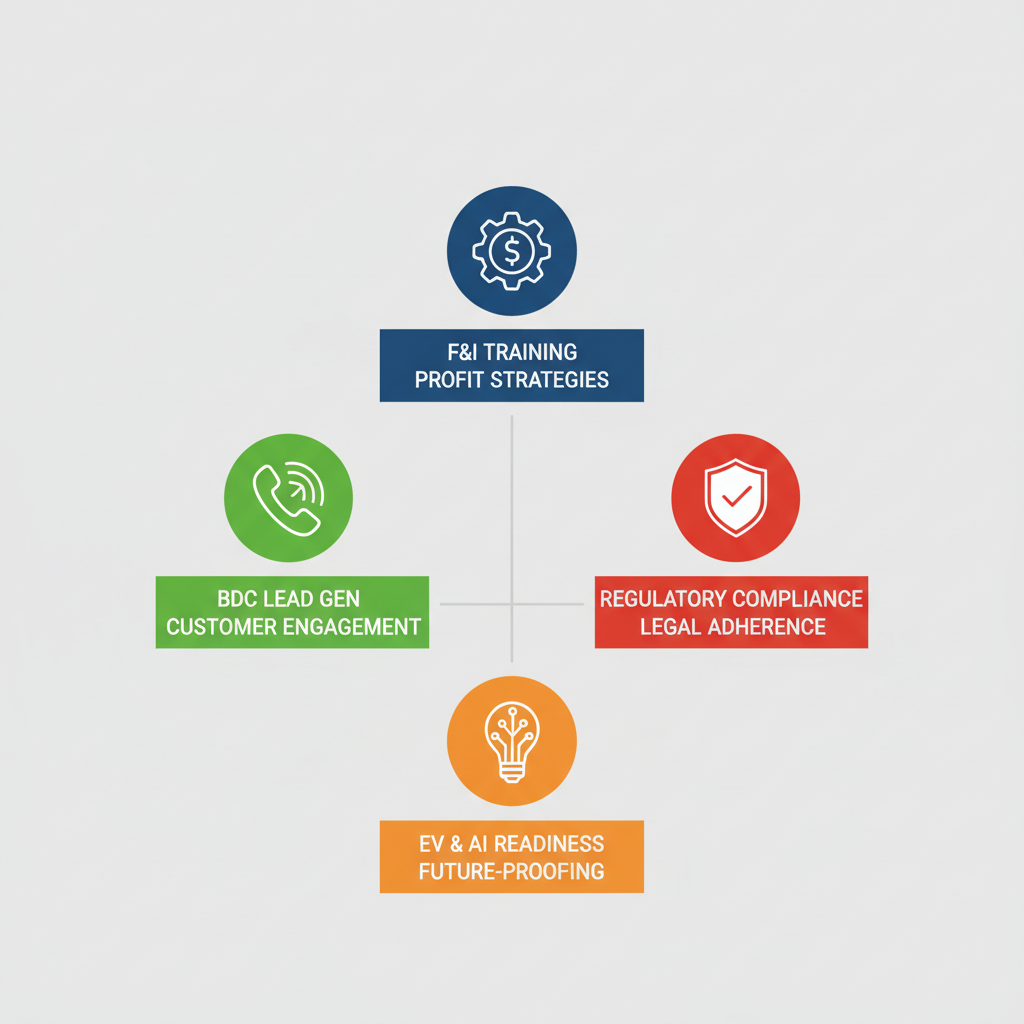
Overview of core dealership training modules: F&I, BDC, compliance, and future-proofing.
Integrating Compliance and Future-Proofing Modules
Compliance training ensures dealerships adhere to regulations like FTC guidelines and state laws, covering documentation, data privacy, and ethical practices to mitigate risks. Future-proofing modules prepare for emerging trends, including EV sales training and AI tool adoption for inventory management. Together, they provide holistic coverage, safeguarding operations while positioning for innovation.
Features encompass audit checklists for F&I and sales processes, scenario-based learning for red-flag identification, and EV readiness simulations for service advisors. AI integration teaches predictive analytics for demand forecasting, with modular sessions that include dealership growth strategy course elements for long-term planning. These draw from operational guides showing reduced violation rates and 15% efficiency boosts through proactive controls.
Examples include training on GDPR-like protections for customer data during digital financing, or workshops on charging infrastructure basics for EV transitions. Staff learn to use AI chatbots for lead qualification, enhancing lead management programs. This integration future-proofs departments against regulatory and technological changes.
Advantages of Investing in Dealership Training
Dealership Performance Improvement Training stands out as a strategic investment for automotive retailers facing tight margins and evolving market demands. By focusing on targeted programs, dealerships can unlock substantial gains in revenue, operational efficiency, and adaptability. This section explores how such training delivers measurable benefits across key areas.
Boosting Profitability Through Specialized Training
Specialized training programs directly elevate dealership earnings by equipping teams with advanced sales and financial strategies. F&I training, for instance, teaches consultants to present upsell options effectively, turning routine deals into high-margin opportunities. These sessions emphasize ethical product presentations that build customer trust while maximizing attachment rates.
Evidence from industry practices shows that dealerships implementing F&I training often see a 20% uplift in per-vehicle revenue. For example, one mid-sized US dealership doubled its F&I income within six months by adopting revenue enhancement workshops focused on menu selling and warranty extensions. This aligns with customer retention strategies that foster repeat business, boosting overall profit margins as noted in expert analyses on leveraging loyal clientele for sustained income.
To apply these insights, prioritize hands-on simulations in training agendas and track metrics like average F&I gross per unit. Regular audits ensure techniques remain effective, safeguarding profitability in competitive landscapes. (148 words)
Enhancing Team Performance and Compliance
Comprehensive training fosters cohesive teams by honing individual skills and promoting interdepartmental collaboration. BDC training refines lead handling and appointment setting, enabling sales and service teams to operate in sync for smoother customer journeys. This not only accelerates deal closures but also minimizes internal silos that hinder performance.
Real-world examples illustrate these gains: a dealership's BDC team, after targeted sessions, increased appointment show rates by 25%, directly correlating with higher conversion volumes. Compliance modules further reduce risks by embedding regulatory knowledge, such as fair lending practices and data privacy, averting fines that average $50,000 per violation. Success stories highlight how sales optimization sessions unified front-line staff, leading to a 15% rise in team productivity without added headcount.
For optimal results, integrate role-playing exercises and cross-departmental workshops. Schedule quarterly refreshers to maintain compliance standards and performance peaks, ensuring every team member contributes to dealership success. (152 words)
Long-Term Growth and Future-Proofing
Investing in forward-thinking training secures enduring profitability by preparing dealerships for industry shifts like electric vehicles and AI integration. Programs covering EV sales tactics and AI-driven inventory management build resilience, turning potential disruptions into growth avenues. This proactive approach positions retailers ahead of competitors adapting reactively.
Quantifiable impacts include sustained revenue growth; dealerships with future-proofing modules report 18% higher adaptability scores in annual audits. A case in point is a regional chain that, through how to grow car dealership business initiatives, expanded EV offerings and saw a 30% increase in alternative fuel sales over two years. These efforts also enhance customer loyalty, as trained teams deliver personalized experiences that drive lifetime value.
- Key advantages: Scalable processes for multi-store operations, innovative tools for emerging tech, and leadership development for strategic vision.
Implement by aligning training with business goals, starting with pilot modules for high-impact areas like EV readiness. Continuous evaluation refines strategies for ongoing expansion. (150 words)
Implementing Effective Dealership Training Strategies
Dealership Performance Improvement Training transforms theoretical knowledge into revenue-generating actions, helping automotive retail operations streamline processes and boost profitability. By leveraging structured implementation frameworks, dealerships can address skill gaps across departments, ensuring consistent performance gains. An automotive dealership training platform provides the modular foundation for this, enabling scalable rollouts that align with real-world demands like thin margins and regulatory shifts.
Step-by-Step Dealer Training Process
- Assess current performance needs: Conduct audits of sales, service, and administrative teams to identify gaps in efficiency and compliance.
- Select targeted modules: Choose from core areas like BDC fundamentals or F&I best practices based on audit results.
- Roll out training in phases: Schedule sessions over a 4-week period, starting with leadership buy-in workshops.
- Evaluate and refine: Measure outcomes using key metrics such as deal close rates and customer satisfaction scores, adjusting as needed.
This sequential approach builds momentum and minimizes disruptions, drawing from established schedules like those from NCM Associates, which sequence modules over similar timelines to ensure phased adoption. It counters common pitfalls, such as employee resistance to change, by involving teams early and demonstrating quick wins in revenue.
- Secure executive sponsorship before launch.
- Allocate dedicated time slots weekly.
- Track progress with digital dashboards.
Implementing these steps fosters a culture of continuous improvement, directly linking training to bottom-line results.
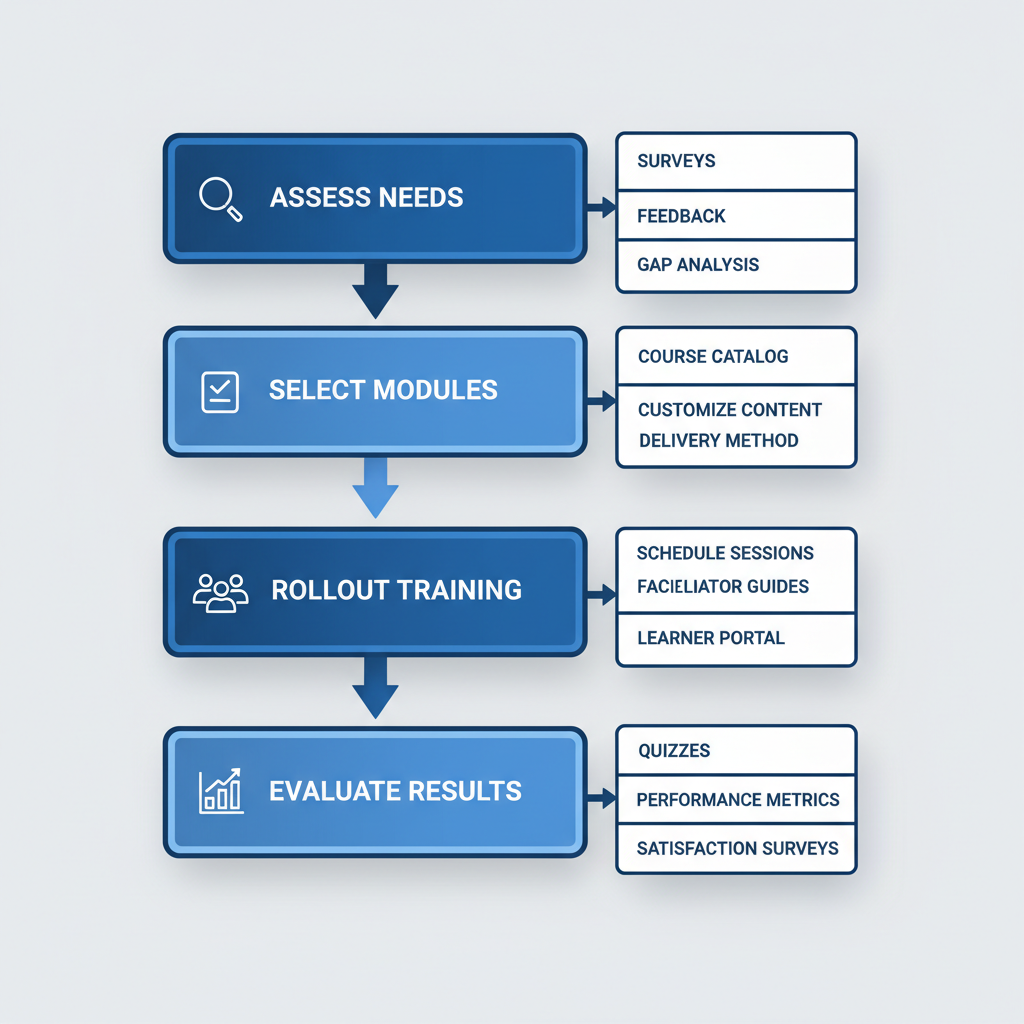
Step-by-step process for effective dealership training implementation
Building High-Performing Teams with BDC Focus
- Define BDC roles and responsibilities: Outline daily tasks from lead generation to appointment setting.
- Develop training schedules: Integrate BDC training modules into a 6-week program with weekly simulations.
- Foster team development initiatives: Pair new hires with mentors for hands-on practice.
- Monitor and incentivize performance: Use metrics like call conversion rates to reward top contributors.
Focusing on BDC training equips teams to handle inbound leads efficiently, increasing show rates by 15-25% as seen in modular programs. This rationale emphasizes collaboration, reducing silos between sales and service while addressing resistance through gamified elements that make learning engaging.
- Establish clear KPIs for BDC agents.
- Conduct role-playing sessions bi-weekly.
- Integrate feedback loops post-training.
Role-Specific Implementation and Checklists
- Customize for F&I: Tailor sessions to include deal structuring and disclosure techniques.
- Address compliance needs: Cover regulatory updates with scenario-based drills over 4 sessions.
- Train management: Focus on oversight tools and multi-department integration.
- Deploy checklists: Distribute printable guides for daily use.
Role-specific approaches ensure relevance, with F&I training boosting attachment rates by 10-15% through practical compliance integration. This prevents errors that erode profits and builds accountability, countering oversight gaps in high-pressure environments.
- Verify license renewals annually for F&I.
- Audit compliance docs monthly.
- Review management dashboards weekly.
Proven Best Practices for Dealer Training
Dealership Performance Improvement Training requires a strategic approach to elevate operations and revenue. By focusing on targeted modules for finance and insurance (F&I) and business development center (BDC) functions, dealerships can achieve measurable gains in sales and compliance. These practices build on foundational training to foster a culture of excellence across departments. They also support measurable, sustainable gains across dealership operations nationwide.
Optimizing F&I and BDC Training Outcomes
- Customize schedules for role-specific needs: Tailor F&I training sessions to finance managers, emphasizing profit-maximizing techniques, while BDC training focuses on lead generation for sales teams.
- Implement metrics tracking: Use pre- and post-training assessments to measure improvements in deal closure rates and customer satisfaction scores.
- Incorporate interactive simulations: Role-play scenarios to build confidence in handling objections during F&I discussions or BDC calls.
These tips enhance effectiveness by addressing real-world challenges, such as inconsistent sales processes. For instance, a dealership adopting blended F&I training saw a 20% rise in per-deal revenue, as per industry benchmarks from fixed operations guides. This approach ensures skills translate directly to the showroom floor.
Start with weekly sessions followed by monthly reviews to sustain momentum and adjust content based on performance data.
Ensuring Compliance and Continuous Improvement
- Conduct regular audits: Schedule quarterly reviews of F&I and BDC interactions to verify adherence to regulations like TCPA and UDAP.
- Foster feedback loops: Encourage staff input through anonymous surveys after advanced compliance workshops to refine training materials.
- Integrate ongoing evaluations: Track key performance indicators, such as error rates in documentation, to identify gaps early.
Compliance training prevents costly fines and builds trust, with examples showing reduced violations by 30% after structured programs. Common errors, like inconsistent follow-up on leads, can erode gains; proactive audits mitigate this risk.
Pair workshops with hands-on drills and annual refreshers to embed best practices and drive continuous enhancement.
Selecting the Right Online Training Resources
- Prioritize modular, affordable platforms: Opt for programs priced at 149 USD per module, offering flexibility for busy teams.
- Seek role-tailored content: Choose resources with specialized tracks for F&I managers on revenue strategies and BDC staff on sales enhancement best practices.
- Evaluate accreditation and support: Look for platforms with process flows, checklists, and access to expert-led sessions.
Selecting quality resources like those from a dealership training academy ensures practical, revenue-focused instruction. Dealerships benefit from EV readiness and AI integration modules, aligning with future trends while improving current operations.
Assess demos and ROI metrics before committing to scale across multiple locations for unified training.
Achieving Peak Performance with Comprehensive Training
Dealership Performance Improvement Training stands as a cornerstone for automotive retail success, empowering every role from owners to frontline staff with the tools to thrive amid rising competition. As highlighted throughout this guide, comprehensive programs deliver transformative results by fostering revenue growth, ensuring regulatory compliance, and building a culture of continuous excellence. From initial assessments to ongoing evaluations, the structured steps--coupled with best practices like targeted role-playing and real-time feedback--equip teams for sustainable operational training.
The core advantages shine through in specialized areas: BDC training sharpens lead generation and customer engagement, while F&I training maximizes profit centers without compromising ethics. Owners benefit from holistic dealer development that aligns departments for peak synergy, driving measurable uplifts in sales and efficiency. Drawing from authoritative insights in The Complete Guide to Dealership Training Programs, these initiatives not only boost profitability but also future-proof operations against industry shifts.
Unlock your dealership's potential today by exploring an online dealership training program tailored for immediate impact. With modular courses at just 149 USD--covering BDC, F&I, compliance, and emerging trends like EV readiness--Dealership360Academy positions your team for enduring excellence. Take the first step toward empowered performance and lasting success.