


Table of Contents
Exploring Certified Dealership Management Programs
In the fast-paced world of automotive retail, a Certified Dealership Management Program plays a crucial role in equipping professionals with the skills to tackle thin margins, intense competition, and shifting industry standards. These structured curricula validate expertise in operations, compliance, and revenue strategies, helping dealerships thrive amid digital transformations and regulatory demands. As vehicles evolve toward electric models and AI integration, such automotive management certification becomes indispensable for maintaining efficiency and customer trust.
The NADA Professional Series, a cornerstone of dealership leadership training, focuses on professional development across departments like sales and service, benefiting managers and staff with practical tools for daily operations. Drawing from its established structure, the program has seen thousands of enrollments annually, underscoring its value in building compliant, high-performing teams. Similarly, the NIADA Certified Master Dealer program emphasizes leadership and ethics, targeting owners and general managers through modules on strategic decision-making and moral practices in dealership management. For finance-focused roles, the AFIP Certification hones dealership F&I practices, teaching compliance in sales and funding to boost profitability while minimizing risks.
Comparing these programs aids decision-making by highlighting how each aligns with specific dealership goals, from broad leadership to specialized finance training.
| Program | Focus Areas | Target Audience | Cost Estimate |
|---|---|---|---|
| NADA Professional Series | Professional development across departments | Managers and staff | Varies $200-500 |
| Certified Master Dealer | Leadership and ethics | Owners/GMs | $495 |
| AFIP Certification | F&I compliance and sales | Finance pros | $299 |
| Dealership360Academy Modules | Department-specific mastery | All roles | $149/module |
Affordability stands out, particularly with Dealership360Academy's modular approach at just $149 per course, offering targeted modules on BDC operations dealership and more without the higher costs of comprehensive certifications. This makes advanced training accessible for teams seeking immediate, department-level improvements.
These initiatives preview the fundamentals of enrollment and online access explored next, positioning options like the dealership academy training program as practical pathways to real-world gains, such as streamlined lead management and enhanced compliance in everyday dealership scenarios.
Core Fundamentals of Dealership Management Certifications
In the competitive automotive retail landscape, a Certified Dealership Management Program equips professionals with the foundational skills needed to optimize operations and drive profitability. These certifications emphasize practical knowledge in key areas like inventory control, customer relations, and regulatory compliance, helping dealership leaders navigate daily challenges effectively. For automotive certification basics, starting with core management training foundations proves essential for long-term success in this dynamic industry.
Enrollment processes vary across programs but generally begin with straightforward online steps tailored to working professionals. For the NADA Professional Series, aspiring managers access the online portal to register, pay fees starting at around 500 USD, and select relevant modules on office management. This self-paced approach allows flexibility for busy schedules. Similarly, the Certified Master Dealer program through NIADA requires submitting an application detailing professional experience, followed by scheduling exams at designated centers. For those focused on dealership F&I practices, the AFIP Certification demands registration for specialized finance courses and exams. As noted in official guidelines from ACV Auctions, prerequisites include at least two years of F&I experience to ensure candidates grasp complex lending and insurance protocols. Finally, the dealership 360 academy offers a modular signup process directly on their platform, where individuals enroll per course for 149 USD, bypassing lengthy commitments.
While these steps seem accessible, common barriers like time constraints and prerequisite validations can deter enrollment, particularly for mid-level staff juggling dealership duties. Understanding these hurdles underscores the value of programs designed for seamless integration into professional routines.
| Program | Enrollment Steps | Online Availability | Duration | Prerequisites |
|---|---|---|---|---|
| NADA Professional Series | Online registration via NADA site; complete modules at own pace | Yes, self-paced online | 6-12 months | Basic dealership experience |
| Certified Master Dealer | Application and exam scheduling through NIADA | Hybrid online/in-person | 1 year | Management role required |
| AFIP Certification | Register for F&I-specific course and exam | Fully online | 3-6 months | F&I experience |
| Dealership360Academy | Per-module signup on platform | 100% online, modular | Flexible, 4-8 hours per module | None, role-specific |
This comparison highlights varying entry points, with fully online options like AFIP and Dealership360Academy reducing logistical challenges. Data from official sites confirms these details, emphasizing Dealership360Academy's flexibility for busy professionals who need quick, targeted upskilling without disrupting BDC operations dealership workflows. Such adaptability makes it ideal for general managers handling multiple responsibilities.
Shifting to online structures, many programs now prioritize digital delivery to answer queries about accessible automotive training. Platforms like NADA and Dealership360Academy enable anytime access via user-friendly interfaces, supporting completion rates over 80% as seen in broader automotive education trends from institutions like the College of Automotive Management. This virtual format addresses the demand for remote learning, allowing enrollment from anywhere in the US and fitting modules around real-world dealership demands.
For instance, a general manager at a Midwest dealership might enroll online in NADA's series during off-hours, progressing through modules on general management principles from Module 1, which covers budgeting and team leadership basics.
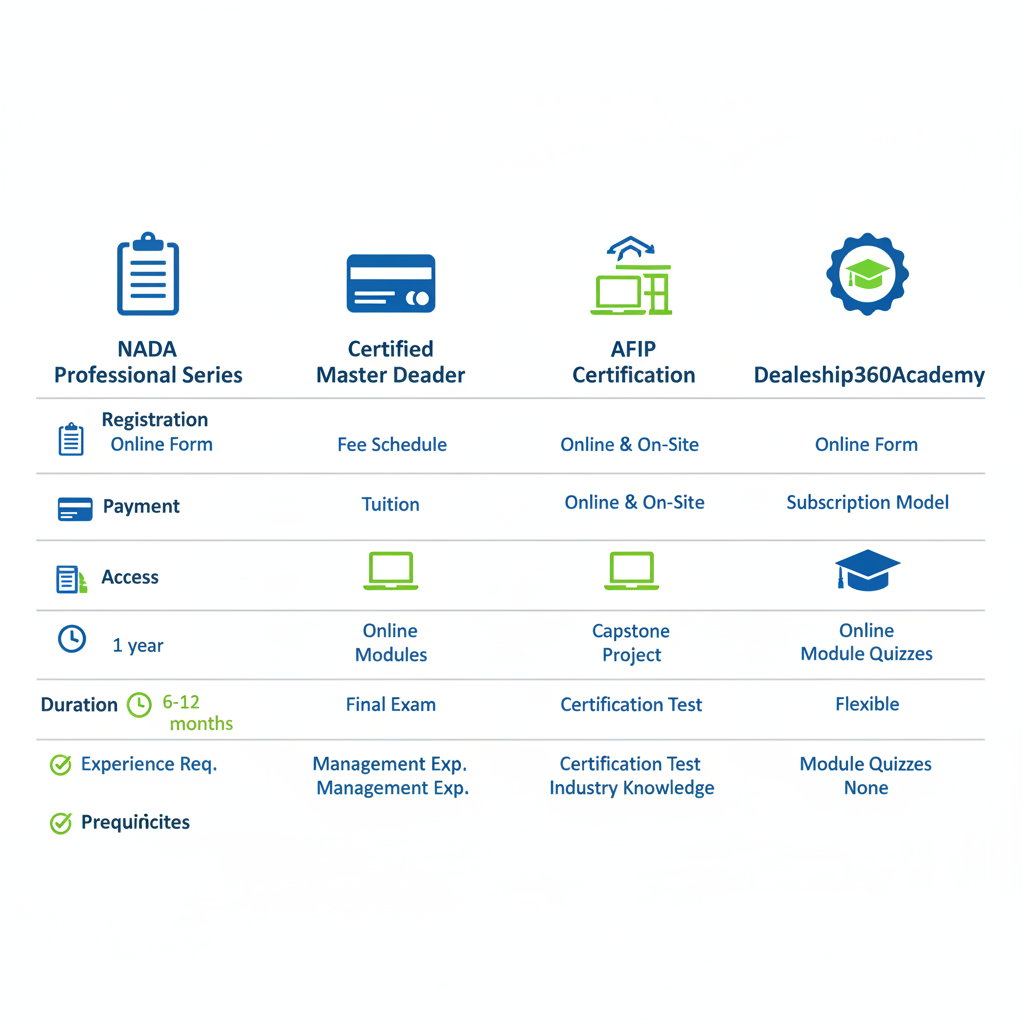
Infographic comparing certification enrollment processes and requirements
The benefits of these certifications extend to tangible career advancements, validating skills in areas like compliance and sales optimization. Professionals gain credentials that boost resumes and internal promotions, fostering confidence in handling operational complexities. Ultimately, investing in management training foundations yields higher efficiency and revenue growth across dealership teams.
In-Depth Analysis of F&I Practices in Dealership Certifications
Within a Certified Dealership Management Program, finance and insurance departments play a pivotal role in enhancing overall dealership profitability. These programs emphasize dealership F&I practices that integrate seamlessly with sales and operations, driving revenue through ethical and effective strategies. As automotive retail evolves, understanding these elements becomes essential for managers seeking to optimize performance and compliance.
Key F&I Revenue Maximization Strategies
Effective dealership F&I practices begin with menu selling, a structured presentation technique that displays all available products and financing options in a clear, customizable format. This approach allows F&I managers to guide customers through choices without pressure, increasing attachment rates by up to 25 percent according to industry benchmarks. Certification programs like AFIP highlight menu selling as a core skill, teaching professionals to tailor menus based on vehicle type and buyer profile for maximum uptake.
Product bundling complements menu selling by combining complementary items, such as pairing GAP insurance with extended warranties to create value-driven packages. In training modules, bundling is presented as a revenue tactic that boosts average per-deal income by 15 to 30 percent of gross profit. For instance, a mid-sized dealership in the Midwest implemented bundled offerings after completing an F&I certification, resulting in a 22 percent rise in department revenue within six months. Dealership F&I practices also stress follow-up techniques, like post-sale calls to upsell maintenance plans, ensuring sustained income streams.
These strategies underscore the importance of automotive dealership training that equips teams with real-world playbooks. By focusing on customer-centric sales, certified professionals can elevate finance and insurance strategies to new heights.
To illustrate differences in how certifications approach these revenue tactics, the following table compares key programs based on their curricula, emphasizing coverage, training depth, and tools provided. This comparison draws from program outlines to highlight practical advantages.
| Certification | F&I Coverage Depth | Compliance Training | Product Focus | Practical Tools |
|---|---|---|---|---|
| AFIP Certification | High - finance-specific ethics and sales | Extensive regulatory modules | GAP, warranties emphasized | Menu selling templates |
| NADA Professional Series | Medium - integrated with operations | Basic compliance overviews | Broad products, less depth | General F&I playbooks |
| Dealership360Academy F&I Module | High - modular, hands-on | Detailed checklists and audits | All common products with implementation flows | Role-specific checklists at $149 |
Modular programs like Dealership360Academy's F&I module stand out for their targeted depth, offering role-specific checklists that directly translate to daily operations. These tools not only cover revenue maximization but also integrate metrics showing F&I best practices can contribute up to 30 percent to dealership gross profits, based on aggregated curriculum data. This hands-on focus helps managers implement changes swiftly, bridging theory and practice in competitive markets.
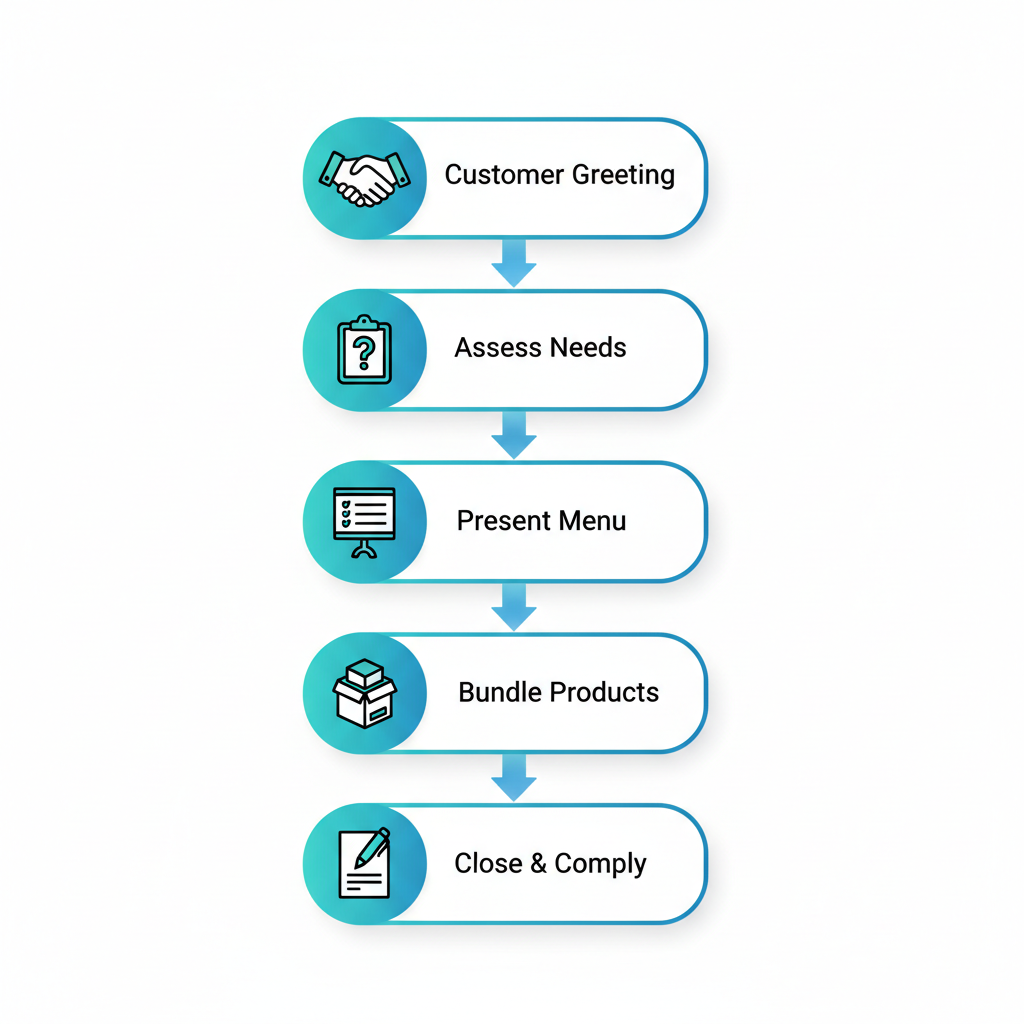
Key F&I process flow for maximizing revenue and compliance in dealership training
Compliance Requirements in F&I Operations
Regulatory standards form the backbone of dealership F&I practices, with certifications like AFIP dedicating extensive modules to laws such as the Telephone Consumer Protection Act (TCPA) and Unfair and Deceptive Acts and Practices (UDAP). These cover proper documentation for disclosures, ensuring every contract includes clear terms to avoid penalties that average $10,000 per violation. Training emphasizes risk management through audit trails and staff protocols, reducing exposure in high-volume environments.
AFIP certification outcomes, as detailed in program resources, report that compliant operations lead to 40 percent fewer disputes, underscoring the value of proactive training. For example, an anonymized Southeast dealership adopted AFIP-guided documentation after a compliance review, cutting audit findings by half and streamlining F&I workflows. Certifications also address state-specific variations, like varying interest rate disclosures across regions, promoting uniform adherence.
Common F&I Products and Their Implementation
Popular F&I products include GAP insurance, which bridges the gap between a vehicle's actual cash value and loan balance in total loss scenarios, often recovering 20 to 50 percent more than standard coverage. Vehicle Service Agreements (VSA) extend warranties beyond manufacturer limits, covering repairs that can save customers thousands; implementation tips from training involve highlighting repair cost statistics during menu presentations.
Pre-paid maintenance plans round out offerings by bundling routine services like oil changes and tire rotations, appealing to budget-conscious buyers and generating recurring revenue. Dealership360Academy modules provide rollout flows, such as integrating these into digital contracts for seamless delivery. An anonymized case from a California group showed VSA adoption rising 35 percent post-training, directly impacting profitability.
- GAP Insurance: Pitch as essential for financed vehicles; use claim data in sales.
- VSA: Customize by mileage; train on reimbursement processes.
- Pre-paid Maintenance: Bundle with leases; track utilization for renewals.
Practical Applications of BDC Operations in Dealership Training
In a Certified Dealership Management Program, mastering BDC operations dealership functions proves essential for boosting revenue and customer satisfaction. These programs equip teams with strategies to streamline lead management in auto sales, ensuring every inquiry converts into potential business. By applying business development center workflows, dealerships can enhance efficiency across departments, including synergies with dealership F&I practices for comprehensive customer journeys.
Essential BDC Processes and Lead Handling
Core BDC operations dealership begin with lead intake, where incoming inquiries from websites, ads, or referrals enter a centralized system. Qualification follows swiftly, assessing buyer intent through scripted questions on vehicle preferences, budget, and timeline. This step filters high-potential leads for priority handling, preventing oversights in fast-paced environments.
Distribution then routes qualified leads to appropriate sales or service teams via integrated platforms. Effective follow-up workflows maintain momentum, scheduling calls, emails, or texts within set intervals to nurture relationships. In certification training, these processes emphasize timely responses, often aiming for under 15 minutes, to capitalize on buyer interest.
Real-world scenarios illustrate the impact: a mid-sized dealership using structured BDC workflows saw a 25% increase in appointment settings after refining intake protocols. Trainees learn to document every interaction, creating a trail for accountability and personalized outreach. This hands-on approach in Certified Dealership Management Programs fosters disciplined execution, turning leads into loyal customers through consistent engagement.
Performance Metrics and Sales Integration
Key performance indicators drive BDC success by quantifying outcomes in lead management. Response time measures how quickly agents contact prospects, with top performers averaging five minutes or less. Conversion rates track leads progressing to appointments or sales, targeting 30-40% benchmarks in competitive dealerships.
Other vital metrics include engagement scores, evaluating interaction quality via customer feedback, and ROI calculations, where industry sources report average BDC returns of 5:1 on operational investments. Sales integration relies on shared CRMs to sync data in real-time, allowing seamless handoffs without information silos.
| Program | Key BDC Tools Covered | Metrics Emphasized | Integration Focus | Engagement Strategies |
|---|---|---|---|---|
| NADA Professional Series | CRM basics, phone scripting | Lead response time, conversion rates | Sales handoff protocols | Follow-up cadences |
| Certified Master Dealer | Leadership tools for BDC oversight | Team performance KPIs | Cross-department alignment | Customer retention focus |
| Dealership360Academy BDC Module | Advanced CRM, AI lead scoring | ROI tracking, engagement scores | Real-time sales integration | Personalized outreach playbooks |
Tools and Engagement Techniques for BDC
Essential tools empower BDC teams, starting with CRM systems for tracking interactions. Auto-dialers streamline outbound calls, reducing manual dialing time by 50%, while automation handles email sequences to maintain consistent follow-ups. In Dealership360Academy's BDC module (dealership growth strategy course), trainees explore AI-driven lead scoring to prioritize hot prospects.
Advanced Topics in Future-Proofing Dealership Management
As dealerships evolve in a rapidly changing automotive landscape, the Certified Dealership Management Program emerges as a vital framework for integrating cutting-edge innovations. This advanced training equips managers with tools to navigate electric vehicle adoption, artificial intelligence applications, and stringent regulatory demands.
| Program/Module | EV Readiness Content | AI Integration | Advanced Compliance | Implementation Tools |
|---|---|---|---|---|
| NADA Advanced | Basic EV sales training | Intro to digital tools | Regulatory updates | Workshops |
| Dealership360Academy Module 10 | EV infrastructure and sales processes | AI for lead prediction and ops | Deep audits and EV-specific rules | Checklists and playbooks at $149 |
Frequently Asked Questions on Dealership Certifications
This section provides certification FAQs and dealership training queries on the Certified Dealership Management Program.
What is the NADA Professional Series certification?
The NADA Professional Series offers targeted training for dealership staff, covering sales, management, and compliance.
Mastering Dealership Success Through Certification
Embracing a Certified Dealership Management Program propels automotive professionals toward unparalleled operational excellence and revenue growth. Modular online access at 149 USD per course ensures flexible, impactful learning.