

Table of Contents
The Essentials of Automotive Dealership Training
In the fast-paced world of automotive retail, Automotive Dealership Training plays a pivotal role in boosting operational efficiency and profitability for car dealerships across the United States. As markets grow more competitive with thin margins, dealerships face pressures from evolving trends like electric vehicle adoption and AI integration. According to Dealership Training Programs, structured initiatives can deliver a 20-30% ROI by enhancing team performance and reducing errors, making car dealer employee development essential for survival.
Many dealerships grapple with inconsistent salesperson performance, where untrained teams struggle to close deals and miss upsell opportunities. For instance, an untrained sales staff might overlook customer financing options, leading to lost revenue, while a trained group consistently exceeds targets through targeted techniques. Inefficiencies in dealership BDC management, or Business Development Center operations, often result in missed leads, and F&I compliance risks, involving Finance and Insurance practices, can invite regulatory penalties. F&I best practices automotive address these by teaching ethical disclosure and product presentation. Auto retail skill enhancement through beginner-friendly sales tips and team-building strategies helps overcome these hurdles, ensuring smoother customer interactions and addressing common queries like financing terms or vehicle suitability.
This guide explores practical modules, from BDC management to F&I best practices, compliance, accounting operations, and future-proofing with EV readiness and AI. Discover automotive online training for dealership managers automotive online training for dealership managers that equips leaders with tactical tools, as outlined in The Complete Guide to Dealership Training Programs, which emphasizes modular education for immediate impact.
Dive deeper into these components to transform your dealership's performance and secure a competitive edge.
Understanding Automotive Dealership Training
In the fast-paced world of automotive retail, Automotive Dealership Training plays a pivotal role in equipping teams with the skills needed to thrive amid rising competition and evolving customer expectations. This training addresses core operations across departments, from sales to finance, ensuring dealerships maintain compliance, boost revenue, and adapt to industry shifts. By focusing on practical strategies, such training helps bridge performance gaps and drives sustainable growth.
Core Components of Dealership Operations
Dealership operations hinge on interconnected departments like sales, business development centers (BDCs), and finance and insurance (F&I), each demanding specialized training to function effectively. Sales teams drive initial customer engagement, while BDCs handle lead nurturing and appointment setting. F&I finalizes deals by offering protective products that enhance customer satisfaction and profitability.
Consider a typical mid-sized dealership: the sales floor buzzes with interactions, but without coordinated BDC support, leads often go cold. BDC fundamentals involve proactive outreach, scripting responses to inquiries, and integrating CRM systems for tracking. Effective dealership BDC management includes performance metrics like call conversion rates and follow-up timelines, which can increase appointment show rates by up to 30 percent according to industry benchmarks. Key strategies encompass role clarity for managers, who oversee agent training and process standardization, directly impacting revenue through higher close rates.
F&I best practices automotive emphasize menu selling techniques, where products such as extended warranties, gap insurance, and tire protection are presented transparently to avoid compliance pitfalls. Common mistakes like high-pressure tactics can erode trust, but proper training on regulatory adherence, such as those under the FTC's Used Car Rule, mitigates risks while maximizing per-vehicle profit--often adding 20-25 percent to gross margins. This foundation sets the stage for identifying where teams fall short.
Identifying Skill Gaps in Automotive Retail
Skill gaps in automotive retail often emerge in high-turnover areas like sales and team coordination, hindering overall efficiency and customer retention. Beginners struggle with objection handling, while veteran sellers may overlook digital lead follow-up, leading to lost opportunities in a market where 70 percent of buyers research online before visiting.
Auto sales team development requires covering essential topics such as product knowledge, consultative selling, and building rapport. Common customer questions--like financing options or vehicle comparisons--expose deficiencies if teams lack scripted responses or demo skills. For instance, at a bustling Texas dealership, new hires frequently fumbled trade-in valuations, resulting in prolonged negotiations and frustrated clients. Beginner tips include active listening exercises and role-playing scenarios to build confidence, alongside training on CRM navigation to track leads seamlessly.
Finance department optimization reveals gaps in compliance awareness and product upselling, where untrained staff might miss revenue potential or violate disclosure rules. Team dynamics suffer when silos form between sales and F&I, underscoring the need for cross-departmental workshops. Addressing these through targeted sessions not only closes gaps but also fosters collaboration, paving the way for embracing future innovations.
Role of Emerging Trends in Training
Emerging trends like electric vehicle (EV) adoption and artificial intelligence (AI) integration are reshaping dealership training, demanding proactive preparation to stay competitive in a shifting automotive landscape. As EV sales surge--projected to reach 40 percent of new vehicles by 2030--dealerships must train on battery diagnostics and incentive programs to meet customer inquiries.
EV readiness involves modules on charging infrastructure, range anxiety rebuttals, and sustainable sales pitches, ensuring advisors can guide eco-conscious buyers effectively. AI tools, such as chatbots for lead qualification and predictive analytics for inventory, require training on ethical use and data privacy to enhance BDC efficiency without alienating personalization.
A forward-thinking dealership success training program incorporates these elements, blending hands-on simulations with compliance updates to future-proof operations. For example, AI-driven forecasting can optimize F&I offerings by anticipating buyer needs, boosting attachment rates. By prioritizing these trends, dealerships protect revenue streams and position themselves as industry leaders, transitioning smoothly into comprehensive benefit realizations.
Key Benefits of Comprehensive Dealership Training
With dealership needs addressed through targeted programs, Automotive Dealership Training delivers transformative results that elevate operations across the board. This approach not only sharpens skills but also drives measurable improvements in revenue, compliance, and adaptability, ensuring US dealerships thrive amid evolving market demands. Owners and managers who invest in such initiatives, including a training academy for car dealership owners, position their teams for sustained success.
Revenue Growth Through Skilled Teams
Comprehensive training fosters revenue growth by empowering sales teams with advanced techniques that boost close rates and customer engagement. Skilled staff excel in consultative selling, leading to higher conversion rates and upsell opportunities, while dealership BDC management streamlines lead nurturing for consistent pipeline flow. In F&I, managers learn menu presentation techniques to maximize per-deal income without pressure tactics.
Evidence from industry benchmarks shows trained sales teams achieve up to 20% higher close rates, as noted in automotive sales training resources. For instance, a mid-sized Texas dealership implemented a 30-day salesperson program, resulting in a 15% sales volume increase within the first quarter. Beginners benefit from foundational tips like active listening, avoiding common pitfalls such as premature closing.
A mini case study from a Florida operation illustrates this: After targeted sessions on team-building for top-performing groups, monthly revenue rose by $150,000, tying directly back to enhanced sales performance and operational efficiency gains.
Enhanced Compliance and Risk Reduction
Training plays a pivotal role in regulatory adherence by equipping teams with knowledge of federal and state guidelines, reducing errors in documentation and disclosures. This minimizes audit risks and penalties, while fostering a culture of accountability across departments. In F&I, it covers common mistakes like incomplete disclosures, ensuring ethical practices that build trust.
Supporting data highlights that compliant dealerships avoid fines averaging $10,000 per violation, per regulatory reports. Training resources emphasize structured approaches, with one 30-day program reducing error rates by 25% through role-playing scenarios. F&I managers gain tips on transparent financing explanations, answering queries on loan terms effectively.
Consider a California dealership's experience: Post-training, compliance incidents dropped 40%, safeguarding profits and reinforcing staff confidence in handling complex deals, ultimately protecting overall dealership stability.
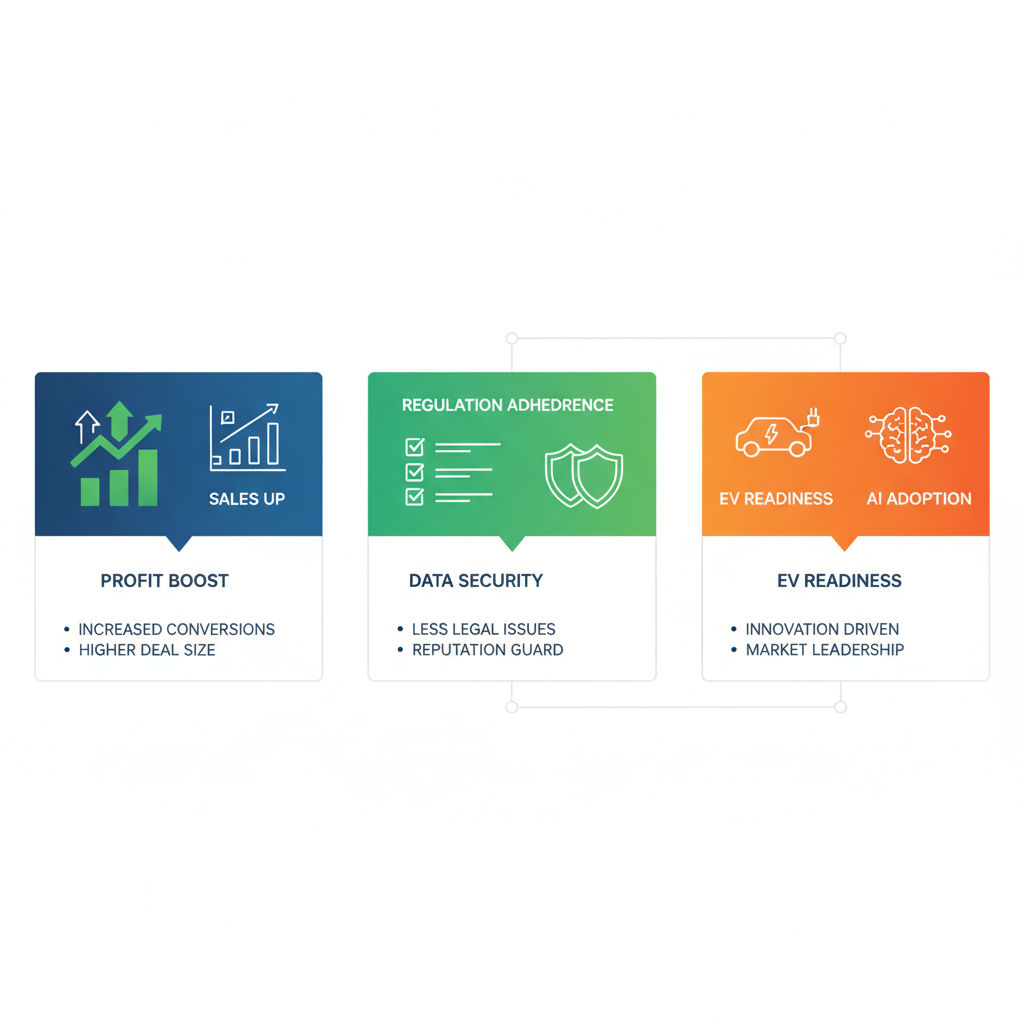
Visual overview of comprehensive dealership training benefits
This infographic underscores how these advantages integrate seamlessly, paving the way for innovative adaptations in the next phase.
Future-Proofing with Innovation Readiness
Dealerships gain long-term success by preparing for electric vehicles (EV) and AI through training that builds technical expertise and strategic foresight. Staff learn EV maintenance protocols and AI-driven customer analytics, enhancing service efficiency and personalization. F&I best practices automotive evolve to include green financing options, aligning with consumer shifts.
Studies indicate trained teams on EV/AI technologies see 30% faster adoption rates, boosting customer satisfaction scores. A beginner tip program outlined in sales training guides shows 90-day ROI via improved advisory roles. Why is employee training important? It answers queries on emerging trends, like AI chatbots for lead qualification.
In a Midwest multi-store group, EV readiness modules led to a 25% uptick in certified sales, future-proofing operations against market disruptions and tying benefits to resilient profitability.
How Automotive Dealership Training Programs Operate
Automotive Dealership Training programs provide structured pathways for enhancing operational efficiency in competitive retail environments. These initiatives equip teams with practical tools to navigate challenges like thin margins and evolving customer expectations. By focusing on modular learning, dealerships can scale training efforts across multiple locations, realizing measurable improvements in performance.
Modular Structure and Delivery Methods
These programs feature a modular design, with each unit priced at 149 USD for accessible entry. Training module delivery occurs primarily through dealership training online platforms, offering flexibility for busy professionals. Courses cover department-specific content, such as BDC strategies for lead management, F&I techniques including menu presentation to avoid common mistakes like overlooking compliance protocols, and beginner tips for handling customer questions on vehicle features or financing options.
Implementation begins with role-specific modules: sales teams learn objection handling and team-building exercises, while compliance units address regulatory updates. Future-proofing modules introduce EV readiness and AI integration, preparing staff for emerging trends. Access is straightforward, with immediate enrollment and progress tracking, ensuring quick adoption even for multi-location operators.
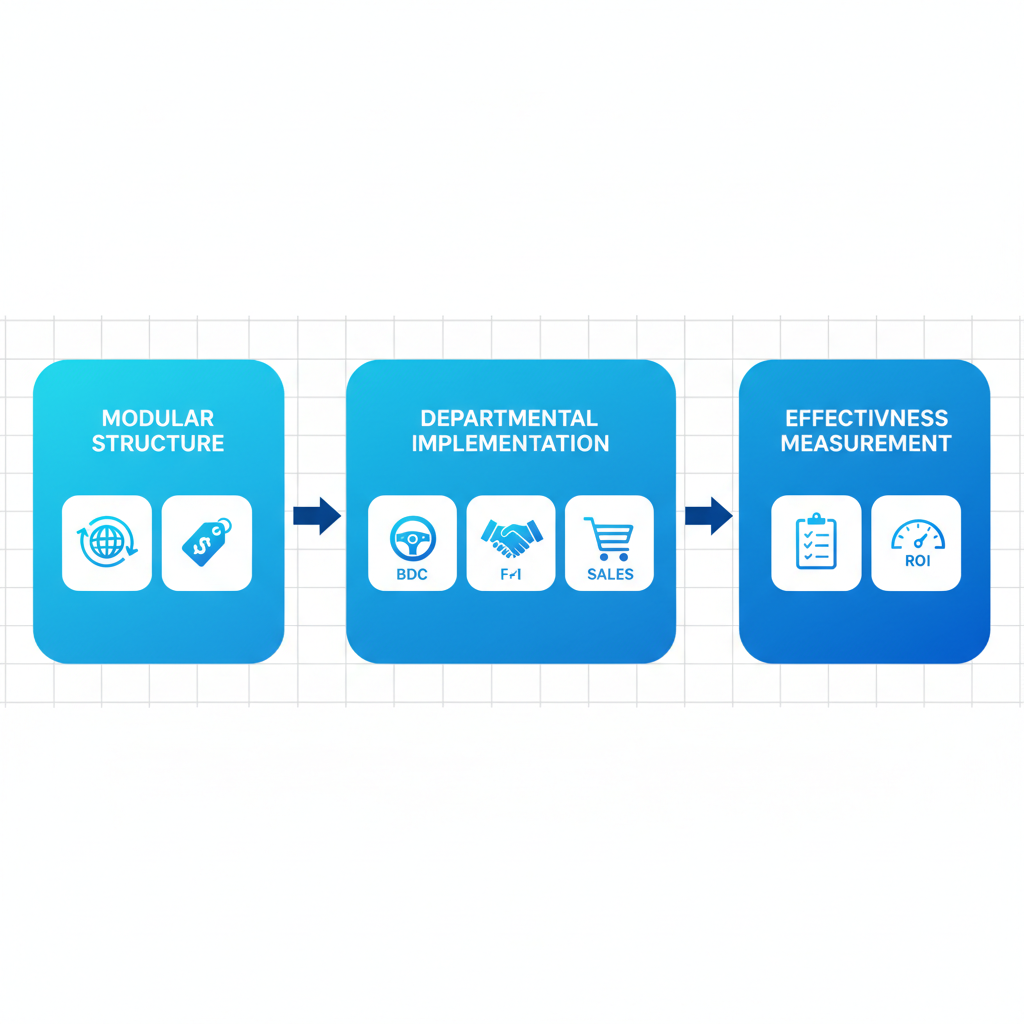
Process flow diagram of dealership training program operations
This visual outlines the seamless progression from enrollment to evaluation, highlighting key touchpoints for optimal results.
Implementation Across Dealership Departments
Departmental process training tailors content to specific roles, starting with 1. Assessing team needs through initial audits; 2. Assigning relevant modules, like those for dealership BDC management; 3. Conducting live sessions or self-paced reviews; 4. Integrating playbooks into daily workflows.
In BDC teams, programs emphasize implementing processes for inbound lead follow-up, addressing questions on appointment setting to boost conversion rates. For F&I managers, training covers F&I best practices automotive, such as effective menu presentations that guide customers through protection products without pressure, avoiding pitfalls like incomplete disclosures. Sales teams benefit from modules on common customer queries, like financing details or trade-in values, fostering confidence in negotiations.
Multi-location operators find value in scalable tools, such as standardized checklists that ensure consistency across stores, promoting coordinated execution from front-line staff to leadership.
Measuring Training Effectiveness
Effectiveness tracking relies on practical metrics, including pre- and post-training assessments, adoption rates of checklists, and ROI calculations tied to revenue uplifts. Programs provide process flows to monitor progress, such as weekly reviews of BDC response times or F&I attachment rates.
Key steps include: 1. Establishing baselines with current performance data; 2. Deploying module quizzes and role-playing evaluations; 3. Analyzing outcomes via dashboards showing improvements in customer satisfaction scores; 4. Adjusting curricula based on feedback to refine departmental applications.
For instance, a dealership might track how F&I training reduces menu presentation errors, leading to 15-20% higher product sales. Compliance modules ensure audit readiness, while EV/AI content prepares teams for future sales cycles. Overall, these measures validate the program's impact, helping operators optimize resources and sustain long-term growth.
Best Practices for Implementing Dealership Training
Implementing effective Automotive Dealership Training requires a strategic approach that aligns with your team's needs and dealership goals. By focusing on customization and practical tools, you can drive better performance across departments. This section outlines key practices drawn from proven frameworks, including role-specific playbooks and modular programs priced at 149 USD for scalability.
Tailoring Training to Departmental Roles
Customizing training for specific roles ensures relevance and higher engagement. For BDC teams, emphasize dealership BDC management techniques to streamline lead handling and appointment setting. In F&I, incorporate F&I best practices automotive to boost revenue through compliant menu presentations. Sales beginners benefit from foundational scripts and objection-handling drills, while compliance modules cover regulatory updates. Dealership360Academy's department-specific courses provide tailored playbooks that address these areas, including EV readiness for forward-thinking teams.
- Assess departmental KPIs to identify gaps, such as BDC conversion rates or F&I penetration.
- Develop role-play scenarios: For sales, simulate customer interactions like "What if the buyer hesitates on financing?"
- Assign modular sessions: Start with 30-minute overviews, followed by hands-on application.
A quick tip: Begin with a team survey to prioritize content, fostering buy-in from the start.
Overcoming Common Implementation Challenges
Rolling out training often faces hurdles like staff resistance, tight schedules, and unclear metrics. Address resistance by showcasing quick wins, such as improved BDC response times leading to higher show rates. Time constraints can be managed with bite-sized modules that fit into busy workflows, inspired by 30-day salesperson training plans that build skills progressively. For measurement, track pre- and post-training data on key indicators like F&I revenue per vehicle.
Practical steps include:
- Conduct introductory workshops to demonstrate value, using case studies from successful dealerships.
- Schedule flexible sessions: Alternate online modules with in-person role-plays for sales objection handling.
- Use dashboards to monitor progress, adjusting based on feedback to avoid common pitfalls like overlooked compliance errors.
Remember, consistent communication turns challenges into opportunities for growth.
Sustaining Long-Term Training Impact
Maintaining training momentum involves ongoing reinforcement and adaptation to industry shifts. Establish quarterly refreshers on core topics like customer question handling and skill application strategies. Integrate updates for emerging trends, such as AI tools in sales or EV integration in F&I. Dealership performance improvement training supports this through accessible, updated modules that encourage continuous development.
Strategies for longevity:
- Create peer mentoring pairs to apply learned techniques, like menu-selling best practices.
- Review annual goals against training outcomes, incorporating feedback loops for refinement.
- Reward milestones, such as certifications, to boost retention and motivation.
Proactive updates ensure your team stays ahead, maximizing ROI over time.
Advancing Your Dealership Through Training
Automotive Dealership Training stands as a cornerstone for elevating operations in the competitive US automotive landscape. By investing in comprehensive auto retail education, dealerships across the United States can foster employee development, sharpen sales tips, and strengthen team building. This strategic dealership development not only protects thin margins but also drives revenue growth through refined processes in every department.
Reflecting on key insights, effective training addresses critical needs in dealership BDC management and F&I best practices automotive, ensuring seamless operations and compliance adherence. From actionable playbooks for business development centers to checklists for finance and insurance teams, these resources equip staff with tools for immediate impact. Training programs yield impressive ROI, with studies showing up to 30% improvement in sales performance and reduced compliance risks, as highlighted in dealership training guides. Moreover, modules on EV readiness and AI integration prepare teams for future trends, enhancing overall efficiency.
To harness these benefits, consider adopting modular courses at just 149 USD each from Dealership360Academy, the go-to resource for practical, department-specific mastery. Start with dealership management certification online to build a competitive edge. Key action steps include:
- Assess current team skills and prioritize high-impact modules.
- Implement weekly training sessions for sustained adoption.
- Track ROI through metrics like sales uplift and error reduction.
Embrace this path to transform your dealership into a high-performing leader today.