


Table of Contents
The Value of Automotive Dealership Training Courses
In the high-stakes world of automotive retail, untrained staff can cost dealerships dearly, with studies from CDK Global revealing that skilled teams drive 20-30% revenue uplifts through better efficiency and customer engagement. This is where an Automotive Dealership Training Course becomes essential, transforming operations amid razor-thin margins and fierce competition. As per NADA Academy standards, proper training enhances customer perception, fostering loyalty and repeat business.
Dealerships thrive when every department operates at peak performance. Key benefits include streamlined sales processes that close deals faster, rigorous compliance to avoid costly fines, and adaptability to emerging trends like electric vehicles. For instance, Business Development Center (BDC) training equips agents with lead management tactics, while Finance and Insurance (F&I) modules ensure ethical practices that protect profits.
Dealership360Academy offers a car dealership staff development program through automotive retail education modules tailored to specific needs. Covering BDC best practices, F&I compliance, accounting, service, and management, the curriculum includes future-proofing with EV readiness and AI tools. Each online dealership training module costs just $149, delivering practical checklists and role-specific strategies for immediate impact.
- Boosted Revenue: Skilled teams convert more leads and upsell effectively.
- Enhanced Compliance: Reduces risks in regulated areas like F&I.
- Operational Efficiency: Aligns departments for seamless workflows.
- Future Readiness: Prepares for EVs and tech shifts.
This guide explores these fundamentals, from core principles to advanced strategies, empowering owners and managers to invest in training that secures long-term success.
Core Principles of Automotive Dealership Training
At the heart of any effective operation lies a well-structured Automotive Dealership Training Course, which equips teams with the knowledge to thrive in a competitive market. These programs emphasize practical skills that drive revenue and ensure compliance across sales, service, and administrative functions. For U.S. dealerships facing thin margins, foundational training builds essential car retail education, turning everyday processes into opportunities for growth. Dealership360Academy offers modular courses priced at $149 each, focusing on real-world application to enhance overall performance.
Understanding the types of training available forms the cornerstone of departmental skill-building programs. Key categories include:
- Skills-based training: Targets sales techniques and customer interaction, teaching representatives how to close deals and build rapport. For instance, modules on lead generation incorporate BDC best practices to streamline appointment setting and improve conversion rates.
- Compliance-focused training: Addresses regulatory requirements, such as F&I compliance, to mitigate legal risks and maintain ethical standards. This ensures staff handle financing disclosures correctly, avoiding costly penalties.
- Process-oriented training: Covers daily workflows like inventory management and customer follow-up, optimizing efficiency in fast-paced environments.
These training types, drawn from NADA's Professional Series, can boost process efficiency by up to 20%, as reported in their office management resources. According to NADA, effective service training significantly influences public perception of the dealership, with 70% of customers basing loyalty on service experiences. A mid-sized dealership in Texas, for example, reduced errors in documentation after implementing compliance modules, leading to higher customer satisfaction scores.
Delivery methods for these courses have evolved, particularly post-pandemic, as dealerships nationwide seek flexible solutions to minimize disruptions. Traditional in-person sessions offer direct interaction but demand coordination for multi-location teams, while virtual formats provide scalability without travel costs. The rise of online platforms aligns with the need for accessible education in the United States, allowing general managers to train staff remotely during peak seasons.
| Method | In-Person | Virtual |
|---|---|---|
| Accessibility | Limited by location and scheduling; requires travel for staff across U.S. dealerships. | Available anytime, anywhere with internet; ideal for multi-location operators. |
| Cost | Higher due to venue, travel, and instructor fees; averages $500+ per participant. | $149 per module online; scalable without additional logistics. |
| Engagement | Hands-on interaction but time-intensive; suits team-building. | Interactive modules with videos and quizzes; flexible pacing. |
This comparison, supported by CDK Global insights on virtual adoption, highlights how virtual methods have surged in popularity, offering 40% greater accessibility for dealerships spanning multiple states. In-person training excels in fostering team cohesion through live simulations, yet virtual options, like those from Dealership360Academy's dealership success training program, enable self-paced learning that fits busy schedules. Post-pandemic data from NADA shows virtual training improving retention rates by 25% due to its convenience, making it a strategic choice for operational continuity.
Dealership training aligns directly with departmental needs to foster excellence. In sales, skills-based modules enhance lead conversion, helping teams exceed quotas through targeted techniques. Service departments benefit from process-oriented courses that improve customer retention, as seen in NADA's findings on service perception driving repeat business. Administrative roles gain from compliance and workflow training, reducing errors and supporting seamless operations. Customization allows integration of brand-specific content, such as manufacturer guidelines, ensuring relevance. These fundamentals lay the groundwork for advanced strategies, enabling dealerships to scale and adapt in a dynamic industry.
Such foundational elements prepare teams for deeper departmental dives, where specialized tactics build on core principles to drive sustained success.
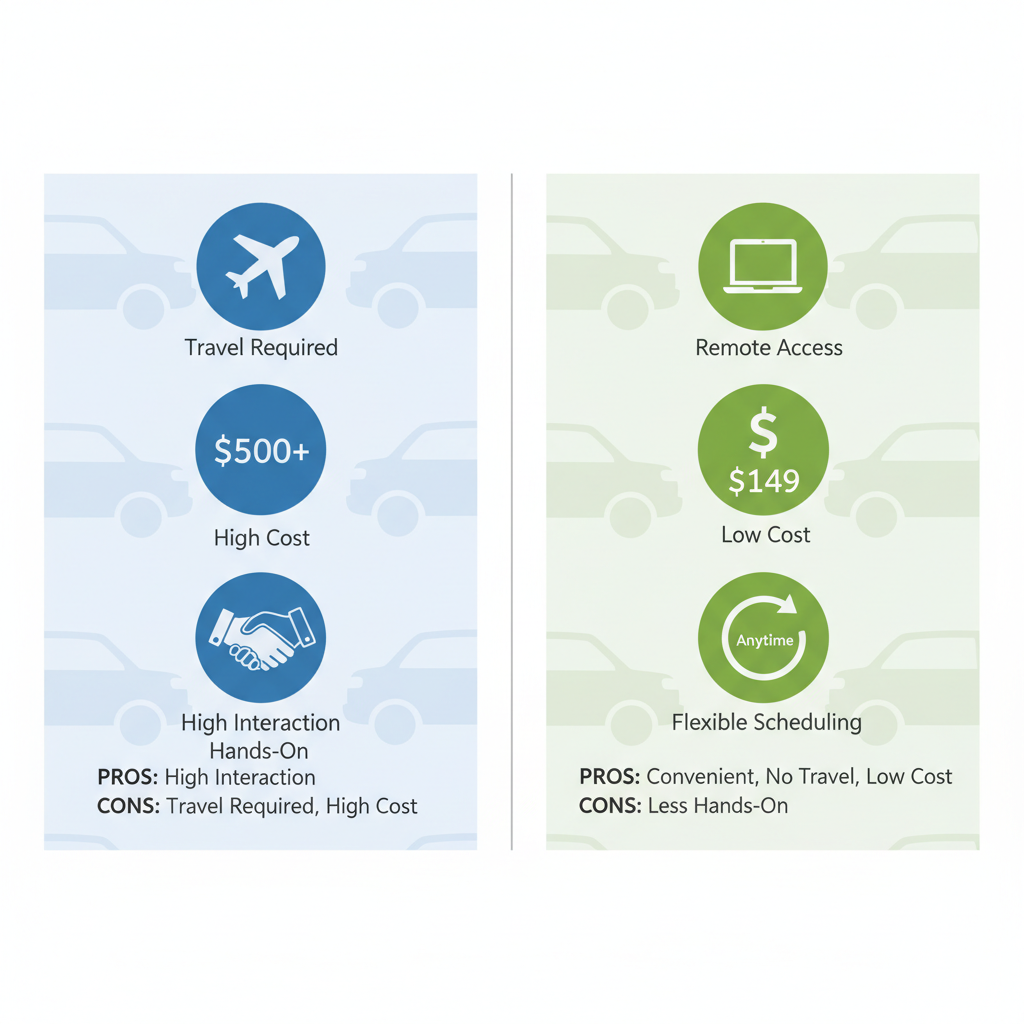
Side-by-side comparison of in-person and virtual automotive training delivery methods
By prioritizing these core principles, dealerships invest in long-term resilience, turning training into a catalyst for measurable improvements across all fronts.
Exploring BDC Best Practices in Dealership Training
In the competitive landscape of automotive retail, mastering BDC best practices is essential for dealerships aiming to boost lead generation and sales efficiency. As part of an Automotive Dealership Training Course, BDC training equips teams with the tools to handle inbound and outbound leads effectively, transforming inquiries into appointments and ultimately vehicle sales. Dealership contact center strategies focus on structured processes that ensure no opportunity slips through the cracks, particularly in high-volume U.S. markets like Texas and Florida where daily inquiries can number in the hundreds.
Key Strategies for Effective BDC Operations
Effective BDC operations begin with a clear understanding of the center's role in managing both inbound leads from online sources and outbound calls to nurture prospects. Key BDC best practices include implementing scripted calls to maintain consistency and professionalism during interactions. Agents should qualify leads by asking targeted questions about vehicle preferences, budget, and timeline, ensuring only viable prospects advance.
Follow-up processes are critical for lead management optimization. Best practices dictate responding to inquiries within five minutes for inbound leads, using a multi-channel approach that includes email, text, and phone. CRM systems track every touchpoint, allowing agents to personalize subsequent communications. For example, a dealership in California might use automated reminders to schedule follow-ups, preventing leads from going cold.
To illustrate the advantages of these strategies over traditional methods, consider the following comparison:
| Aspect | BDC Strategies | Traditional Methods |
|---|---|---|
| Lead Response Time | Under 5 minutes | 24-48 hours |
| Qualification Process | Structured scripting | Ad-hoc conversations |
| Follow-Up | Multi-channel automated | Manual phone calls only |
| Conversion Rate | 25-30% | 10-15% |
This table highlights how BDC best practices streamline operations, leading to higher engagement rates. Training programs emphasize role-playing exercises to refine these skills, drawing from the academy's BDC module for practical checklists that agents can implement immediately. By adopting these dealership contact center strategies, teams see measurable improvements in appointment settings, with NADA studies showing up to 40% better lead conversion from well-trained BDC units.
Metrics and Integration with Sales Teams
Tracking BDC performance requires focusing on key metrics that directly impact dealership profitability. Response time measures how quickly agents engage leads, with benchmarks aiming for under 15 minutes to maximize conversions. Appointment set rates track the percentage of interactions resulting in scheduled visits, typically targeting 20-25% for top-performing centers. ROI calculations consider the cost of BDC operations against generated revenue, often revealing a 5:1 return when practices are optimized.
Other vital metrics include lead quality scores and customer satisfaction ratings from post-interaction surveys. According to NADA ATD Education benchmarks, dealerships with robust BDC tracking achieve 40% higher lead conversion rates compared to those without. These indicators help identify training gaps, such as slow response times in high-inquiry periods, guiding targeted improvements.
Integration with sales teams ensures seamless lead handoffs, minimizing drop-offs. Shared dashboards provide real-time visibility into BDC activities, allowing sales reps to prepare for incoming appointments with full lead history. Handoff protocols, like detailed notes in the CRM, facilitate warm transfers where BDC agents introduce the prospect to the salesperson via conference call.
For U.S. dealerships, this alignment is crucial in multi-location operations. A mid-sized group in the Midwest might use integrated platforms to sync BDC efforts across stores, ensuring consistent messaging. Pursuing dealership management certification online can further enhance these processes, offering certifications that validate integrated workflows.
Selecting the right BDC software is pivotal for supporting these metrics and integrations. Dealerships should evaluate tools based on ease of use, scalability for team size, and compatibility with existing dealer management systems. Cost-effectiveness and robust reporting features are also essential, especially for varying dealership scales from small independents to large groups.
The following table compares popular BDC tools:
| Feature | Contact Pro | VinSolutions | DealerSocket |
|---|---|---|---|
| Lead Management | Automated routing and CRM sync | AI-driven lead scoring | Multi-channel tracking |
| Integration with Sales | Basic API; $50/user/month | Full DMS integration; $75/user/month | Seamless handover; $60/user/month |
| Reporting Metrics | Response time, conversion rates | Advanced analytics dashboard | Custom KPI tracking |
Contact Pro suits smaller dealerships with its affordable entry point and straightforward setup, ideal for basic lead routing without overwhelming features. VinSolutions excels for mid-sized operations needing AI insights to prioritize high-value leads, though the higher cost reflects its advanced analytics. DealerSocket offers balanced value for larger teams, with strong multi-channel support and customizable reporting that aids in sales integration.
Recommendations vary by dealership size: Opt for Contact Pro if you're a single-location store under 50 employees to keep costs low while building foundational BDC best practices. For expanding groups, VinSolutions provides the depth for lead management optimization across multiple sites. Overall, these tools, combined with consistent training, drive BDC efficiency and sales synergy, as evidenced by industry benchmarks from NADA showing sustained ROI growth.
Applying F&I Compliance in Daily Dealership Operations
Integrating F&I compliance into everyday dealership activities ensures smooth sales processes while safeguarding against legal risks. Finance and insurance departments handle critical aspects of vehicle purchases, from presenting product menus to finalizing contracts. By embedding dealership sales compliance protocols, teams can boost customer trust and profitability. This practical guide draws on insights from the NADA Academy for Training and Development to outline actionable strategies for U.S. automotive retail professionals.
Common Violations and Prevention Techniques
In automotive dealerships, F&I compliance violations often stem from rushed deal closings or inadequate documentation. A frequent pitfall involves incomplete disclosures under the Truth in Lending Act, where finance managers fail to clearly explain interest rates and fees, leading to customer confusion and potential lawsuits. Another common issue is pressure tactics during menu presentations, which can violate Unfair or Deceptive Acts and Practices standards by misleading buyers on optional products like extended warranties.
Real-world examples highlight these risks. In a recent FTC case against a Midwest dealership, aggressive upselling without proper consent resulted in hefty fines. Similarly, ignoring Telephone Consumer Protection Act rules by using unverified contact lists has led to violations in outbound follow-ups.
To prevent such errors, implement step-by-step avoidance methods. First, use a standardized menu presentation checklist that lists all disclosures required for each product. Second, train sales staff to obtain explicit written consent before discussing financing options. Third, conduct daily audits of closed deals to verify complete paperwork. These dealership sales compliance protocols not only reduce fines but also enhance repeat business through transparent practices.
The following table provides an overview of key U.S. regulations affecting F&I, based on NADA compliance guidelines and recent enforcement actions:
| Aspect | TCPA | TILA | UDAP |
|---|---|---|---|
| Focus Area | Do-not-call lists and consent. | Truth in lending disclosures. | Unfair/deceptive practices. |
| Training Needs | Consent documentation scripts. | Clear fee explanations. | Ethical sales guidelines. |
| Penalties | Fines up to $1,500/violation. | Rescission and damages. | FTC enforcement actions. |
This comparison underscores the diverse regulatory landscape. For instance, TCPA violations often arise from poor consent tracking, while TILA issues tie directly to disclosure accuracy. Addressing these through targeted prevention ties into broader finance insurance regulatory training, minimizing penalties and supporting long-term dealership success. Recent FTC cases on dealerships emphasize the need for proactive measures, such as scripting consent verifications to avoid do-not-call breaches.
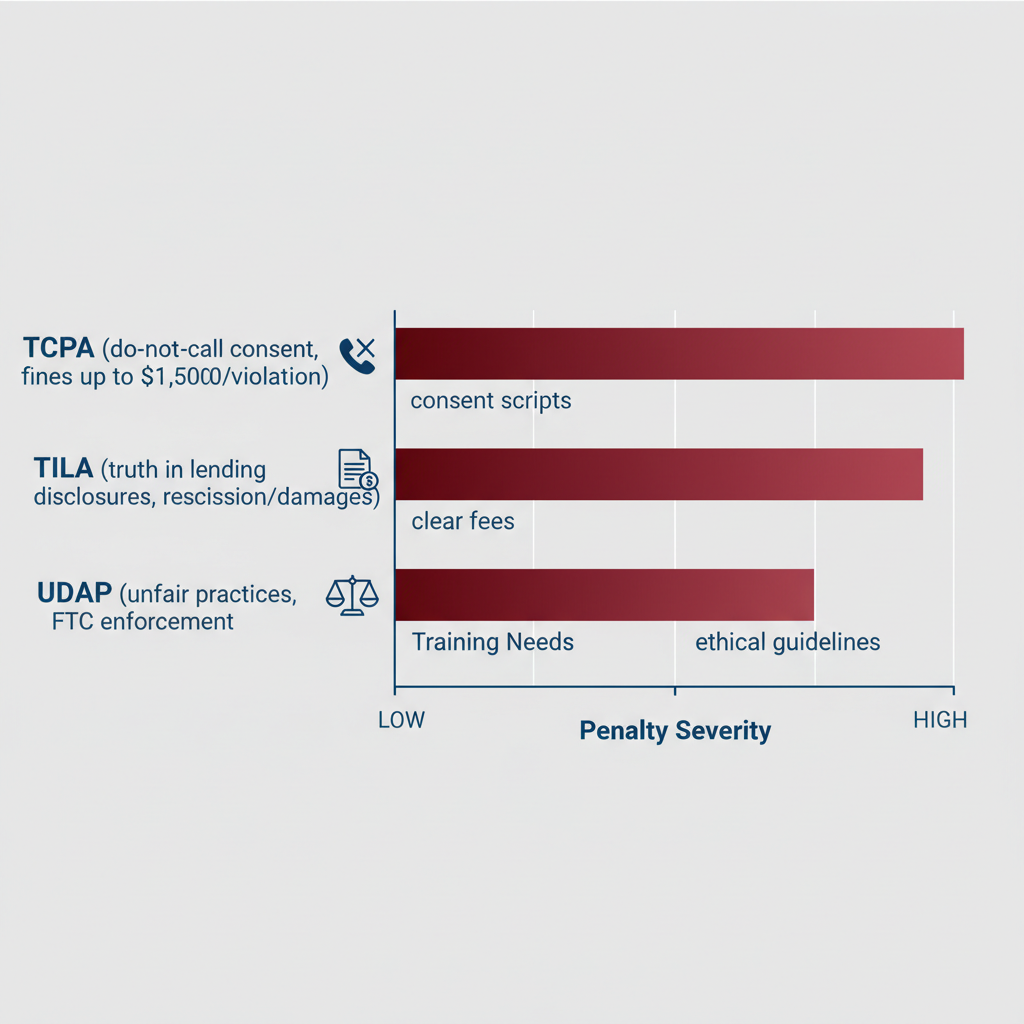
Visual overview of F&I regulations and penalty severities for dealership training
The chart above visually reinforces how penalties escalate with non-compliance, prompting dealerships to prioritize structured avoidance techniques. By reviewing such data, managers can tailor their F&I processes to high-risk areas like disclosure timing during contract closings.
Staff Training Protocols for Regulatory Adherence
Effective F&I compliance training transforms regulatory requirements into habitual practices for finance teams. Within an Automotive Dealership Training Course, sessions should cover the full F&I lifecycle, starting with menu presentations and ending with contract reviews. Role-playing exercises simulate high-pressure sales scenarios, helping staff practice ethical responses without resorting to pressure tactics.
Outline a comprehensive protocol using these numbered steps. 1. Schedule bi-weekly workshops focusing on key regulations like TCPA consent rules. 2. Incorporate interactive simulations where trainees handle mock customer objections while adhering to TILA disclosure standards. 3. Assign ongoing monitoring through peer reviews of deal files, ensuring UDAP guidelines are followed in product recommendations.
NADA Academy resources offer valuable modules on these topics, including certification paths that emphasize practical application. For example, a case study from a Texas dealership showed how role-playing reduced violation rates by 40% after implementing similar protocols.
To compare training approaches, consider the benefits of different formats:
| Training Method | Workshop (In-Person) | Online Modules |
|---|---|---|
| Engagement | High interaction via group discussions | Flexible self-paced learning |
| Cost | Higher due to venue and facilitators | Lower, accessible remotely |
| Retention | Strong through hands-on practice | Reinforced with quizzes and videos |
| Scalability | Limited to group size | Ideal for multi-location dealerships |
Workshops excel in building team cohesion for complex F&I scenarios, while online options suit busy schedules. Integrating automotive online training for dealership managers allows for consistent delivery across departments, linking compliance to profitability by averting fines up to $1,500 per TCPA breach. Continuous evaluation, such as quarterly certifications, ensures adherence and fosters a culture of accountability. This approach not only answers how to train staff on F&I compliance but also drives sustainable operations in competitive markets.
Customizing Training for Future-Proof Dealerships
In the rapidly evolving U.S. automotive landscape, dealerships must adapt to stay competitive. Customizing an Automotive Dealership Training Course allows operators to tailor content to specific needs, such as brand alignments or regional demands. This tailored automotive education ensures relevance, whether for single locations or expansive multi-store groups. For instance, modules can be adjusted for luxury OEMs focusing on premium service protocols or volume dealers emphasizing high-throughput sales processes. Scalable dealership development becomes key, enabling groups to roll out uniform training across sites while accommodating local variations. Such flexibility addresses the question of whether dealership training can be customized for specific brands or groups: yes, through modular adaptations that build practical mastery in core areas like management and emerging technologies.
To customize effectively, consider these steps:
- Assess dealership goals, including EV adoption targets or AI tool integration.
- Select base modules, such as Module 1 for general management or Module 10 for future-proofing.
- Adapt content with OEM-specific examples and regional compliance needs.
- Choose delivery formats, blending virtual sessions for scalability with in-person workshops for hands-on practice.
As U.S. market shifts accelerate toward electrification and digital operations, advanced topics like EV readiness and AI integration gain prominence. According to CDK Global insights, dealerships adopting these technologies see up to 25% efficiency boosts in daily workflows. NADA frameworks further support scalable training for multi-site operations, ensuring consistent performance. The following table compares key aspects of the academy's EV Readiness and AI Integration modules, highlighting their distinct yet complementary roles in preparing dealerships for tomorrow.
| Aspect | EV Readiness Module | AI Integration Module |
|---|---|---|
| Content Focus | Charging infrastructure, EV sales training. | AI for inventory, customer personalization. |
| Customization Options | Brand-specific EV models; group scaling. | Dealership data integration; multi-store. |
| Outcomes | Improved EV adoption rates. | Efficiency gains in operations. |
This comparison underscores how EV modules drive sales innovation, while AI focuses on operational streamlining. For implementation, start with pilot programs in high-volume stores, integrating automotive dealer certification course elements to certify staff. Pair these with BDC best practices for lead nurturing enhanced by AI, and F&I compliance training to mitigate risks in digital transactions.
The benefits of such customization extend to fostering innovation adoption and reducing operational risks. Dealerships gain a forward-thinking edge, with hybrid sessions allowing remote teams to engage alongside on-site leaders. Ultimately, this approach equips teams to navigate U.S. trends like rising EV sales and AI-driven personalization, ensuring long-term resilience and profitability.
Common Questions on Dealership Training
Addressing common dealership education FAQs, this section resolves automotive training queries about the Automotive Dealership Training Course. Drawing from NADA resources, these answers highlight practical benefits for operations.
Why is training important for dealerships? Training directly impacts retention and sales by equipping staff with skills to improve customer satisfaction and efficiency. For instance, service training influences public perception, as noted in industry guides, leading to higher loyalty and revenue.
Which departments benefit from training? Key areas include the Business Development Center for lead management, Finance and Insurance for deal structuring, and service for maintenance protocols. Each gains targeted expertise to enhance performance.
What types of training are available? Options range from modular courses focused on specific skills to comprehensive certification programs. These formats allow flexible learning tailored to dealership needs.
Is in-person or virtual training offered? Virtual delivery is available through accessible online platforms, priced at $149 per module for convenience without travel.
Can training be customized for brands or groups? Yes, academy modules support customization for specific brands or multi-store groups, incorporating bespoke elements like compliance updates or regional strategies.
How does training affect service perception? Effective service training builds trust and positive reviews, making it the largest influence on dealership reputation according to NADA insights.
Elevating Your Dealership Through Targeted Training
Embracing an Automotive Dealership Training Course unlocks strategic dealership advancement through integrated retail training. By mastering BDC best practices and F&I compliance, dealerships boost efficiency, ensure regulatory adherence, and foster innovation across departments.
These targeted programs, as endorsed by industry leaders like NADA ATD, drive measurable performance uplifts, from streamlined operations to enhanced revenue streams. The modular approach delivers practical tools for sustained success.
Start with core modules priced at just $149, covering BDC, F&I, and more. Explore an online course for car dealership owners today and elevate your dealership to new heights.