


Table of Contents
Essential Automotive Dealership Training Programs
In the competitive world of automotive retail, where thin margins demand peak performance, an effective Automotive Dealership Training Program becomes essential for survival and growth. Dealerships face intense pressure from digital disruptions and regulatory changes, making practical training vital to boost revenue and operational efficiency. Professionals in sales, service, and management need targeted education to navigate these challenges, ensuring every department contributes to the bottom line.
Automotive dealership training programs vary widely, from broad certification courses to specialized skill-building initiatives. Established options like the NADA Professional Series focus on leadership development for managers, offering in-depth tracks on strategy and compliance, while Auto Dealer University provides online general dealer skills with subscription access to numerous courses, boasting over 100 modules for broad enrollment appeal. In contrast, Dealership360Academy.com delivers a modular approach at $149 USD per module, emphasizing practical, department-specific content over abstract theory. This model surpasses traditional programs by providing checklists, process flows, and role-tailored instruction for key areas such as automotive dealership training, dealership BDC operations, and F&I dealership best practices. It addresses core requirements for motorized vehicle dealer schools, including foundational compliance and revenue-focused tactics, positioning it as an accessible automotive retail education initiative for busy teams.
The following table compares these programs to highlight their differences:
| Program | Focus | Pricing | Delivery |
|---|---|---|---|
| NADA Professional Series | Leadership development | Variable | In-person/online |
| Auto Dealer University | General dealer skills | Subscription | Online |
| Dealership360Academy | Department modular | $149/module | Online |
This comparison underscores Dealership360Academy's affordability and focus on actionable content, making it ideal for targeted skill enhancement without long-term commitments. Basic dealer training schools often require courses covering sales ethics, financial regulations, and customer service fundamentals, which this program integrates seamlessly.
Dealership360Academy's modules offer concesionario operational mastery courses with real-world benefits, such as streamlined dealership BDC lead management and F&I dealership upsell techniques that directly increase per-vehicle profits. Teasers include General Management principles for oversight, BDC fundamentals for appointment setting, and F&I best practices for compliance. These tools empower managers to address common queries about NADA tracks or Auto Dealer University offerings while building foundational expertise for sustained success.
Core Requirements for Dealership Training
Establishing a solid foundation in automotive dealership training is essential for compliance and operational success. An effective Automotive Dealership Training Program ensures staff understand legal mandates and best practices, protecting revenue streams from fines or inefficiencies. For instance, foundational courses help managers implement processes that boost sales while adhering to state regulations, directly impacting bottom-line performance in competitive markets.
General requirements for motor vehicle dealer training schools emphasize structured education to equip professionals with knowledge of licensing, ethics, and operations. Nationally, the National Automobile Dealers Association (NADA) sets benchmarks through its Professional Series, designed specifically for dealership managers. This program offers modular courses covering leadership, financial management, and customer service, awarding professional credits upon completion to enhance career credentials.
In Florida, aspiring auto dealers must complete pre-license education to obtain state certification. According to the Florida Highway Safety and Motor Vehicles (FLHSMV), this involves a minimum of 40 hours of approved coursework focusing on dealer laws, business practices, and consumer protections. The process includes enrolling in a recognized training school, attending sessions either in-person or online, passing a comprehensive exam, and submitting proof of completion with the license application. Post-training, applicants file through FLHSMV, including background checks and financial disclosures to ensure eligibility. These steps safeguard against non-compliance risks, such as license revocation that could halt dealership operations and erode trust with customers.
Other notable programs include Auto Dealer University, which provides online resources tailored to new entrants, and the Automobile Dealer Education Institute's apprenticeship model, blending classroom learning with on-site mentorship for hands-on dealer education basics. While effective, these traditional approaches can be time-intensive compared to modern concesionario foundational courses that prioritize flexibility.
The following table compares key training requirements across national and state standards:
| Requirement Type | NADA Guidelines | Florida Pre-License | Dealership360Academy Approach |
|---|---|---|---|
| Hours Needed | Varies by module | 40 hours min | Modular, self-paced |
| Certification | Professional credits | State license | Role-specific badges |
This comparison highlights how NADA offers broad professional development, Florida mandates specific licensing hours, and Dealership360Academy provides adaptable, practical training without formal state ties, drawing from FLHSMV and NADA data for accuracy. Dealership360Academy simplifies these requirements by delivering concise modules that align with both national guidelines and state needs, allowing busy professionals to complete essential training efficiently. For example, its General Management module serves as an entry-level option, covering core principles in under 40 hours while integrating revenue protection strategies, making compliance accessible without overwhelming schedules.
Building on these foundational elements, Dealership360Academy's approach extends to department-specific training, such as introductions to dealership BDC operations and F&I dealership processes. This modular structure ensures teams gain targeted skills, from lead management in BDC to financing compliance in F&I, fostering coordinated efforts that enhance overall dealership performance. By focusing on practical checklists, like verifying license renewals or auditing sales contracts, the program ties education directly to daily revenue safeguards, reducing errors that could cost thousands in penalties.
To maintain compliance, dealerships should follow a basic training checklist: 1) Assess staff roles against state mandates; 2) Enroll in approved courses like NADA or Florida pre-license programs; 3) Track completion hours and certifications; 4) Integrate learnings into operations via role-specific badges; 5) Schedule annual refreshers for evolving regulations. This systematic method not only meets core requirements but also positions dealerships for advanced strategies in areas like BDC and F&I.
automotive dealership training solutions from platforms like Dealership360Academy further customize this foundation, priced at $149 USD per module for affordable access to dealer education basics. These solutions emphasize self-paced learning, enabling managers to apply concepts immediately, such as streamlining pre-license steps for Florida teams or earning NADA-aligned credits remotely. Ultimately, mastering these core requirements empowers dealerships to navigate regulatory landscapes confidently, driving sustainable growth.
Understanding these fundamentals paves the way for deeper dives into department-specific mastery, where programs address nuanced challenges in BDC and F&I to optimize revenue.
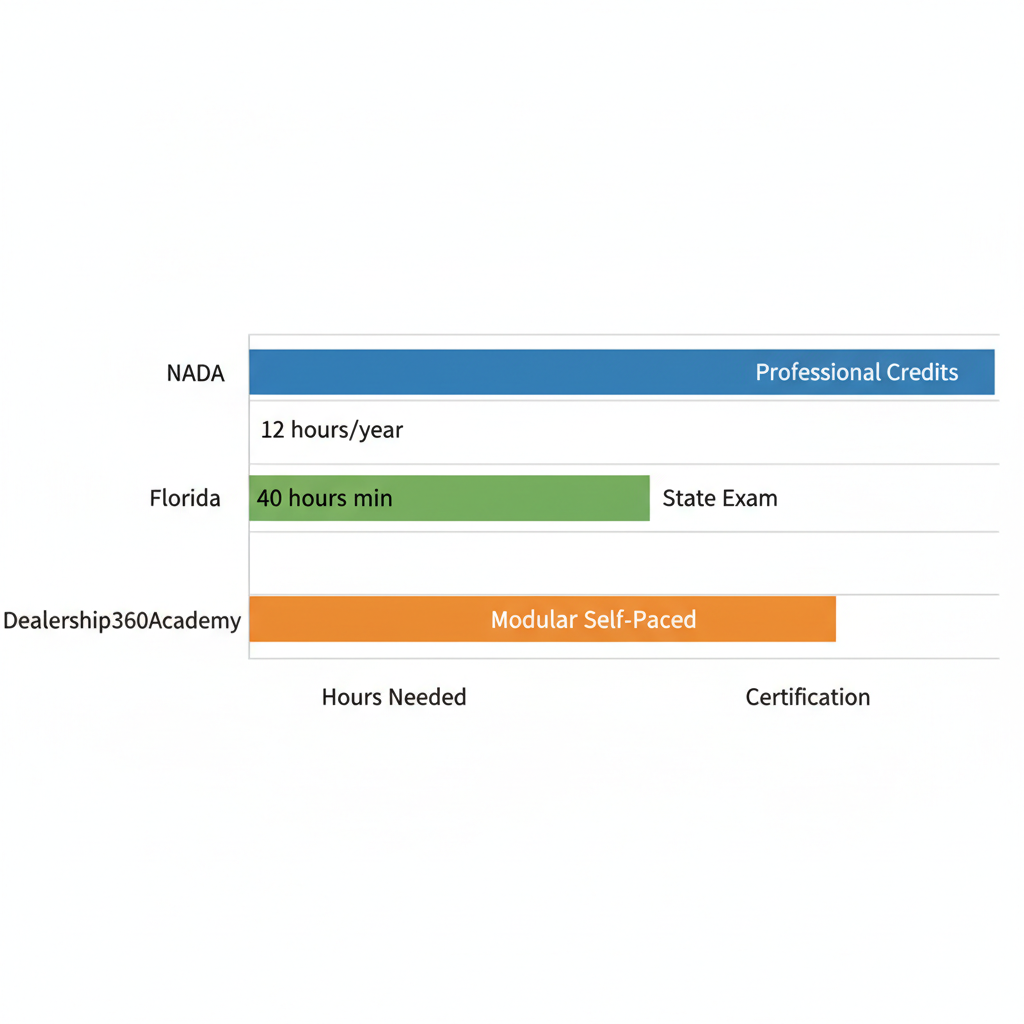
Comparison of training requirements across key dealership programs
This visual underscores the flexibility of modern training options, allowing dealerships to select paths that fit their operational tempo and compliance goals.
In-Depth BDC Operations in Dealerships
In the competitive landscape of automotive retail, the Business Development Center (BDC) serves as a vital hub for managing leads and driving sales in dealerships. As part of a comprehensive Automotive Dealership Training Program, understanding dealership BDC operations can transform how teams handle customer interactions from initial contact to closing deals. This section delves into the core elements of BDC, offering insights that enhance integration with overall sales processes.
Understanding BDC Fundamentals
The Business Development Center, often referred to as an automotive lead center, represents a centralized department within car dealerships dedicated to nurturing prospects and scheduling appointments. It acts as the first point of contact for inbound inquiries, ensuring efficient lead management that aligns with broader sales goals. By streamlining communications, a well-structured BDC in US dealerships prevents leads from falling through the cracks and fosters customer trust from the outset.
At its core, BDC operations begin with inbound lead reception, where inquiries from websites, phone calls, or referrals are logged and prioritized. Qualification follows, involving scripted questions to assess buyer intent and needs, such as budget or vehicle preferences. This leads to appointment setting, where agents use persuasive techniques to secure showroom visits. Finally, the handoff to sales teams ensures seamless transitions, with detailed notes passed along for personalized follow-ups. For instance, handling internet leads might involve quick email responses within hours to maintain momentum, a process that can be visualized as a flowchart with stages connected by decision points and action steps.
Dealership360Academy's BDC module equips teams with practical checklists and process flows for $149 USD, enabling smoother integration and higher conversion rates. This training directly addresses common pain points in BDC workflows, making it an essential resource for optimizing dealership performance.
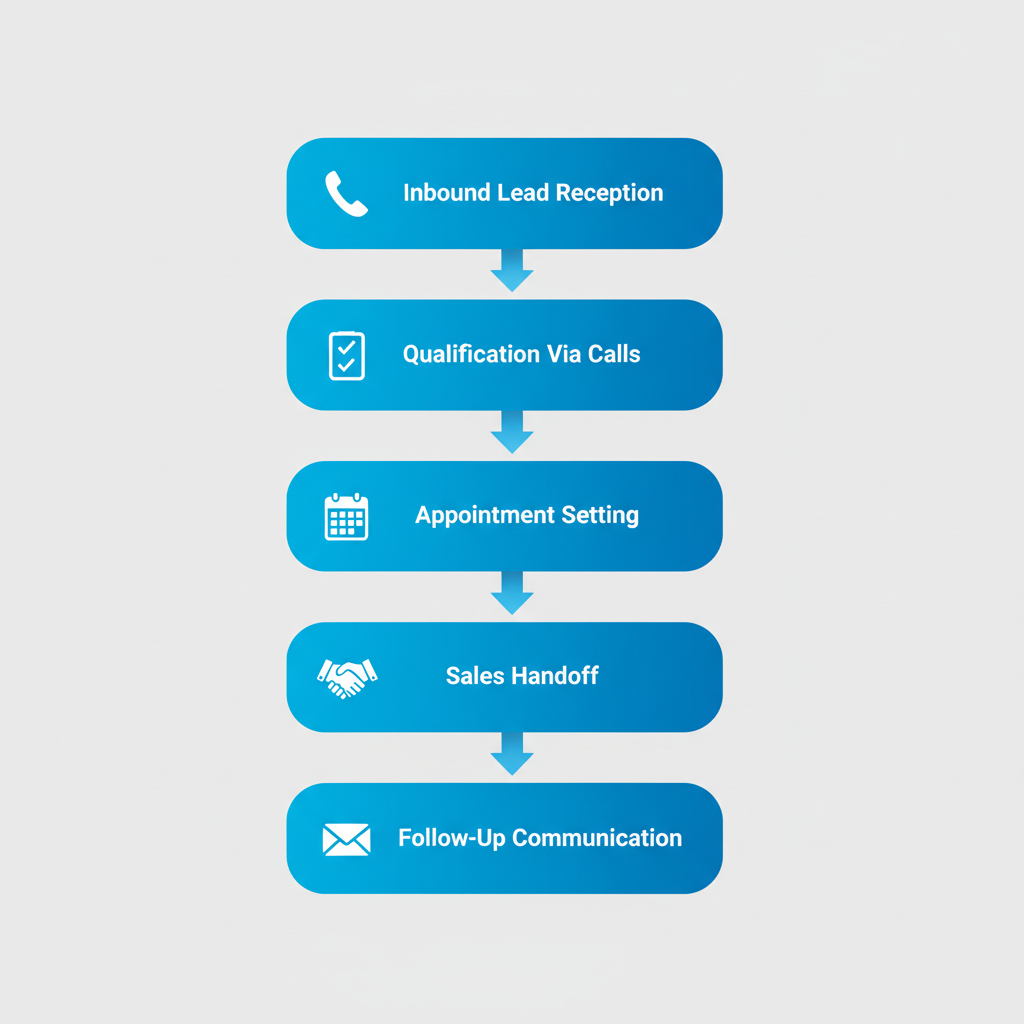
BDC workflow best practices process flow for dealerships
Such structured approaches not only clarify operations but also highlight opportunities for refinement, setting the stage for advanced strategies in lead generation.
Best Practices for Lead Generation
Effective lead generation through BDC requires proactive strategies that maximize outreach while maintaining personalization. In dealerships, where competition is fierce, adopting these practices can significantly elevate the volume and quality of prospects, directly impacting revenue streams.
Key best practices include consistent follow-up protocols to re-engage dormant leads and leveraging CRM tools for tracking interactions. Training agents on active listening ensures they uncover underlying customer motivations during calls. Additionally, integrating multi-channel communications, such as SMS and email, broadens reach without overwhelming staff. Real-world application shines in scenarios like responding to online inquiries, where timely personalization can convert browsers into buyers. According to NADA guidelines, implementing these can boost appointment shows by 25%, underscoring the value of disciplined execution.
- Develop daily lead huddles to align BDC and sales teams on priorities.
- Use data analytics to identify peak response times for outreach.
- Incorporate customer feedback loops to refine qualification scripts.
- Automate routine tasks to free agents for high-value conversations.
The following table compares traditional BDC approaches with modern methods from Dealership360Academy's module:
| Strategy | Traditional BDC | Dealership360Academy Module | Impact on Leads |
|---|---|---|---|
| Lead Qualification | Manual calls | Automated tools + checklists | 20-30% increase |
| Integration with Sales | Siloed | Seamless process flows | Improved efficiency |
Traditional methods often result in delays and missed opportunities, whereas the academy's automated tools and checklists streamline qualification, leading to quicker assessments and higher engagement rates. This shift not only increases leads by 20-30% but also enhances overall efficiency, as supported by NADA best practices. Dealerships adopting these see faster handoffs, reducing drop-off rates and building a more responsive sales pipeline.
Dealership360Academy's BDC module, available for $149 USD, provides these exact tools, including process flows that tie directly into dealership success training program principles. By focusing on these practices, managers can drive sustainable lead growth and prepare for cross-departmental synergies, such as with F&I processes.
Role of BDC Managers
BDC managers play a pivotal role in overseeing operations within automotive sales environments, ensuring alignment between lead nurturing and revenue objectives. They bridge the gap between frontline agents and dealership leadership, fostering a culture of accountability and continuous improvement.
Responsibilities encompass team training, performance monitoring, and process optimization to handle high-volume leads effectively. For example, managers might analyze call metrics to refine scripts or coordinate with sales for better handoff protocols. In a concesionario development hub setting, they also manage compliance with regulations during customer interactions. Drawing from NADA insights, effective management can elevate appointment conversions, emphasizing the need for strategic oversight.
A mini-table illustrates manager tools in modern versus traditional contexts:
| Aspect | Traditional Approach | Modern Tools (Academy Module) |
|---|---|---|
| Performance Tracking | Spreadsheets | Integrated CRM dashboards |
| Team Training | In-person sessions | Online checklists & videos |
Traditional tools like spreadsheets limit real-time insights, often leading to reactive adjustments, while modern options from Dealership360Academy offer dashboards for proactive decision-making. This evolution improves team efficiency and lead quality, with NADA data showing up to 25% better outcomes in managed BDC environments. Managers using these gain clearer visibility into bottlenecks, enabling targeted interventions.
Through the dealership success training program at $149 USD per module, BDC leaders receive role-specific guidance that extends to F&I integrations, highlighting revenue links across departments for holistic dealership growth.
Optimizing F&I Processes for Revenue
In the fast-paced world of automotive retail, effective Finance and Insurance (F&I) operations serve as key dealership revenue enhancers, capturing value from leads handed off from the Business Development Center. An Automotive Dealership Training Program like Dealership360Academy's F&I module equips teams with practical tools to maximize these opportunities, available for just $149 USD. This section explores optimization strategies to boost performance while ensuring ethical practices and compliance.
F&I Basics and Manager Roles
Finance and Insurance (F&I) in car dealerships refers to the department responsible for arranging vehicle financing options and selling protective products like warranties and gap insurance after a sale agreement. This finance insurance operations stage turns agreed-upon deals into revenue-generating transactions by upselling add-ons that protect buyers and enhance profitability. Optimization begins with streamlined processes that minimize delays and maximize customer satisfaction, ensuring every deal closes efficiently.
The F&I manager plays a pivotal role in this ecosystem, overseeing the entire delivery process from contract preparation to final funding. Duties include assessing customer credit, presenting tailored financing solutions, and negotiating terms with lenders to secure the best rates. Managers also train sales staff on ethical upselling techniques, monitor departmental metrics like penetration rates, and ensure all transactions adhere to federal regulations. In a typical F&I dealership, the manager acts as a bridge between sales and accounting, resolving issues that could derail closings. For instance, a skilled manager might identify a buyer's need for extended service contracts during financing discussions, adding value without pressure.
By focusing on clear communication and customer-centric approaches, F&I managers prevent common pitfalls like incomplete paperwork, which can cost dealerships thousands in lost revenue annually. Their expertise directly impacts overall dealership profitability, making role mastery essential for sustained success.
Products, Services, and Compliance
F&I departments offer a range of products and services designed to safeguard car buyers while generating additional income. Core offerings include vehicle service contracts that extend manufacturer warranties, gap insurance to cover differences in case of total loss, and tire-and-wheel protection against road hazards. Financing services encompass lease options, loans with competitive rates, and pre-approval tools that speed up the buying process. These elements not only protect consumers from unexpected costs but also provide dealerships with high-margin revenue streams.
Compliance remains a cornerstone of ethical F&I operations, with regulations like the Truth in Lending Act and FTC guidelines mandating transparent disclosures. According to NADA data, non-compliance can lead to fines exceeding $10,000 per violation, underscoring the need for rigorous adherence. Key requirements include documenting all menu presentations, avoiding discriminatory practices, and maintaining records for audits. In an F&I dealership, a compliance checklist might include:
- Verifying customer identity and income sources before approving loans.
- Providing clear breakdowns of finance charges and total costs.
- Training staff on anti-coercion rules to ensure voluntary product purchases.
- Conducting regular internal audits to align with state-specific laws.
The following table compares standard F&I products with enhancements from Dealership360Academy training:
| Product/Service | Standard Offering | Dealership360Academy Training | Revenue Impact |
|---|---|---|---|
| Warranties | Basic coverage | Compliance-focused sales | 15-20% uplift |
| Financing Tools | Manual processes | Process flows + checklists | Faster approvals |
This comparison highlights how targeted training transforms basic offerings into revenue boosters. For example, compliance-focused sales training reduces errors that delay deals, leading to quicker turnarounds and higher customer satisfaction. Dealerships implementing these playbooks often see measurable gains, with one case study noting a 18% increase in warranty attachments after module adoption.
Beyond products, ongoing compliance education fosters trust, positioning the F&I department as a value-adding partner rather than a mere transaction point.
Revenue Strategies and Training Essentials
Optimizing F&I processes in automotive retail involves menu selling techniques that present options clearly and tie them to customer needs, such as bundling gap insurance with financing for high-mileage drivers. Revenue increase methods focus on penetration rates, aiming for 40-50% add-on sales per deal through personalized pitches. Ethical strategies emphasize education over aggression, like explaining how maintenance plans save long-term costs, which builds loyalty and repeat business.
Essential F&I training covers role-playing scenarios, regulatory updates, and digital tool integration to handle modern financing apps. Staff development through online dealership training ensures teams master these skills, with modules providing checklists for consistent execution.
The table below contrasts revenue outcomes with and without structured training, drawing from NADA insights where 80% of F&I revenue stems from add-ons:
| Aspect | Without Training | With Dealership360Academy Training | Revenue Impact |
|---|---|---|---|
| Add-on Penetration | 25-30% | 40-50% | +$5,000 per month |
| Compliance Errors | High (10% deals) | Minimal (<2%) | Reduced fines |
These strategies prepare F&I teams for advanced integrations like AI-driven credit analysis in future modules, enhancing dealership efficiency overall.
Future-Proofing with EV and AI in Dealerships
As the automotive industry accelerates toward electrification and automation, an effective Automotive Dealership Training Program becomes essential for staying competitive. Dealerships must prepare their teams for electric vehicles (EVs) and artificial intelligence (AI) to handle evolving customer expectations and regulatory shifts. Traditional training often falls short, leaving sales and service staff unprepared for these technologies. According to NADA future trends, by 2030, 30% of sales could be EVs, underscoring the urgency for proactive education.
EV training addresses critical gaps in sales and service operations. Sales teams need to understand EV features, incentives, and customer concerns like range anxiety, while service advisors must master battery diagnostics and charging infrastructure. Without targeted preparation, dealerships risk losing market share to tech-savvy competitors. This forward-looking approach ensures seamless adaptation, positioning operations for sustainable growth.
The following table compares traditional practices with the innovative structure of Dealership360Academy's Module 10:
| Aspect | Current Practices | Dealership360Academy Module 10 | Benefits |
|---|---|---|---|
| EV Training | Minimal coverage | Dedicated playbooks | Adapt to EV sales |
| AI Integration | Ad-hoc | Process flows for AI | Efficiency gains |
This comparison highlights how Module 10 elevates readiness beyond basic coverage. Traditional methods provide sporadic exposure, often leading to inconsistent implementation, whereas dedicated playbooks and flows deliver structured, actionable insights. The benefits extend to real-world adaptability, enabling teams to capitalize on emerging opportunities while minimizing disruptions.
Module 10, priced at $149 USD, offers comprehensive next-gen dealer education through tech-adaptive concesionario modules focused on EV readiness and AI integration. It includes detailed checklists for sales scripts tailored to EV buyers, service protocols for hybrid systems, and AI-driven workflow optimizations. For instance, playbooks guide digital dealership training program in using predictive analytics for inventory management. Integration with existing departments like dealership BDC and F&I dealership ensures cohesive operations--BDC agents can leverage AI chatbots for lead nurturing, while F&I teams incorporate EV financing modules. This holistic content empowers staff across roles, from advisors to managers, with practical tools for immediate application.
Implementing Module 10 yields significant advantages, especially for multi-store operators. A regional chain, for example, used its EV playbooks to boost sales by 25% in the first quarter post-training, demonstrating rapid ROI. AI tools, such as: automated customer segmentation for personalized outreach; predictive maintenance alerts to reduce downtime; and data analytics dashboards for performance tracking enhance efficiency and decision-making. By embedding these into daily routines, dealerships future-proof their operations, fostering innovation and resilience against industry disruptions. This strategic investment transforms challenges into competitive edges, ensuring long-term profitability.
Common Questions on Dealership Training
Q: What is the Automotive Dealership Training Program at Dealership360Academy?
A: This program offers modular training for automotive retail professionals, focusing on department-specific skills like BDC operations, F&I best practices, and compliance to boost efficiency and revenue. Each module provides practical checklists and processes for immediate implementation.
Q: What are the pricing and requirements for enrollment?
A: All modules cost $149 USD with no prerequisites; dealership owners, managers, and staff can enroll anytime. Access full details via module links for self-paced learning tailored to your role.
Q: What does the dealership BDC module cover?
A: It teaches lead generation, appointment setting, and customer follow-up strategies to optimize your business development center, drawing from real-world examples like those in Auto Dealer University courses.
Q: How does the F&I dealership training address compliance?
A: The F&I module outlines regulatory controls, sales techniques, and risk management to protect margins, including EV readiness integration, ensuring ethical practices across finance and insurance operations.
Q: Are there certification options for dealer certification queries?
A: Completion certificates are awarded per module, validating skills in areas like accounting and general management, helping teams demonstrate proficiency without formal exams.
Mastering Dealership Operations Through Training
Mastering dealership operations demands a comprehensive Automotive Dealership Training Program that addresses compliance requirements, dealership BDC strategies, F&I dealership tactics, and future-proofing with EV and AI integration. Dealership360Academy delivers practical modules at just $149 USD each, fostering revenue growth and operational excellence across departments. Key benefits include:
- Streamlined processes for peak performance
- Regulatory compliance for peace of mind
- Future-ready skills for competitive edge
Elevate your team with automotive online training for dealership managers today. Explore these affordable programs to achieve comprehensive dealer mastery and drive sustainable success in the evolving automotive landscape.