

Dealership Success Training Program - Resources
Enroll in Dealership Success Training Program: Proven F&I Best Practices
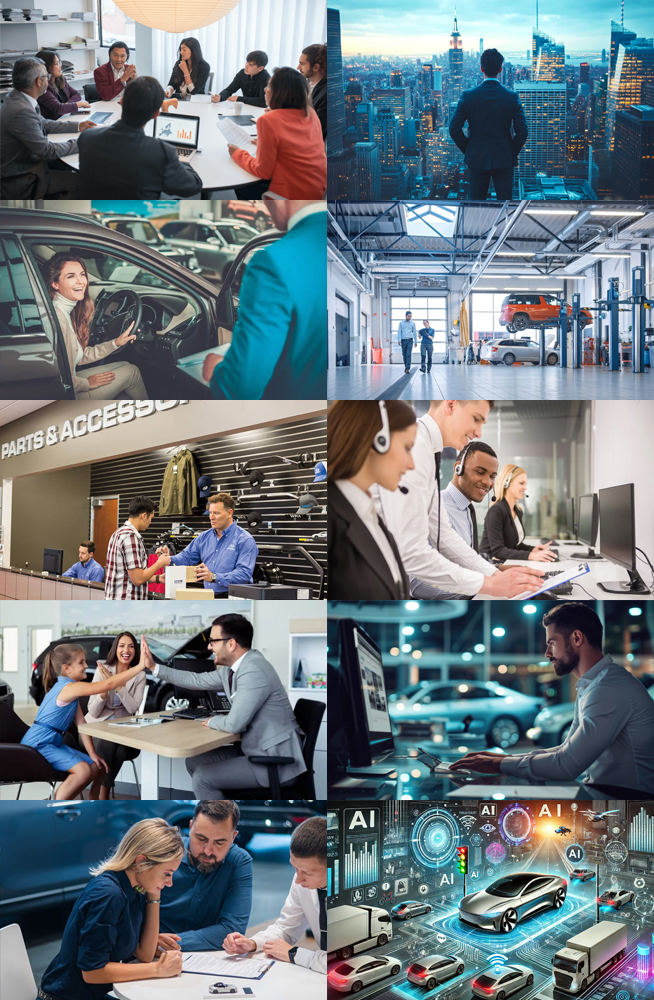
In the rapidly evolving landscape of automotive retail, the difference between peak performance and operational stagnation often hinges on the quality of staff education. Dealerships today face an environment defined by thinning margins, intense digital competition, and a shift toward complex electrification. To navigate these challenges, owners and operators must move beyond abstract theory into the realm of tactical, department-level mastery. A comprehensive Dealership Success Training Program provides the necessary framework to ensure every facet of the business, from the front-line sales floor to the back-office accounting desk, operates with synchronized precision and a revenue-minded focus.
The Transformative Benefits of Dealership Training Programs
The primary benefit of a structured dealership training program lies in its ability to create repeatable, scalable processes that protect profitability. When staff members are equipped with consistent methodologies, the dealership experiences reduced turnover and increased employee confidence. High-quality training bridges the gap between hiring a talented individual and developing a high-performing professional who understands the nuances of the automotive lifecycle. Furthermore, these programs instill a culture of accountability. By providing clear playbooks and checklists, management can measure performance against objective standards rather than subjective impressions.
In addition to internal morale and retention, professional development directly impacts the customer experience. A well-trained team communicates with transparency and authority, which is essential in an era where consumers enter the showroom with more data than ever before. Training ensures that the staff can handle objections, explain complex financial products, and facilitate a seamless transition between the digital lead and the physical sale. Ultimately, the cumulative effect of these improvements is a more resilient business model that can withstand market fluctuations and shifts in consumer behavior.
Strategic Foundations for Building a Car Sales Training Program
Building an effective car sales training program for dealerships requires a departure from one-size-fits-all workshops. Instead, the foundation must be built on modularity and department-specific focus. A successful architecture begins with General Management principles to ensure leadership is aligned with the operational vision. From there, the program should bifurcate into specialized tracks that address the unique pressures of each role. For example, incorporating specific f&i best practices is vital for maximizing the back-end profit per vehicle retailed while maintaining strict regulatory compliance.
The construction of such a program must also prioritize actionable tools over vague concepts. Effective training includes process flows that detail every step of the customer journey, from the initial greeting to the final delivery. By integrating real-world scenarios and role-specific checklists, dealerships can ensure that the theory taught in the classroom translates directly to the showroom floor. This tactical approach allows new hires to become productive more quickly and helps veteran employees refine their techniques to meet modern market demands.
Essential Topics for Comprehensive Training and Operational Success
To truly drive success, a Dealership Success Training Program must cover the full spectrum of retail operations. While sales often receive the most attention, the modern dealership requires excellence in often-overlooked areas. Accounting and office operations must be included to ensure financial accuracy and cash flow management. Additionally, with the rise of digital retailing, mastering bdc strategies has become a non-negotiable requirement. The Business Development Center serves as the heartbeat of lead management, and specialized training here ensures that no opportunity is lost to poor follow-up or inconsistent messaging.
Future-Proofing and Technological Integration
Beyond the traditional departments, modern programs must address the "Future-Proofing" of the dealership. This involves deep dives into electric vehicle (EV) readiness and the integration of artificial intelligence (AI) into daily workflows. As the industry pivots toward sustainable energy, service and sales departments alike need to understand the unique requirements of EV shoppers. Simultaneously, AI tools can be harnessed to optimize inventory management and personalize marketing efforts. Integrating these forward-looking topics into the core curriculum ensures that the dealership remains relevant as the automotive landscape undergoes its most significant transformation in decades.
How Specialized Training Programs Drive Tangible Success
Training drives success in dealerships by eliminating the silos that naturally form between departments. When the sales team understands the constraints of the F&I office, and the BDC team understands the inventory challenges faced by the floor managers, the entire operation moves in harmony. This coordinated execution is what allows a high-performing Dealership Success Training Program to yield measurable results. Success is not just measured in units sold, but in the growth of Gross Profit After Policy and the reduction of compliance-related risks.
Furthermore, effective training courses are characterized by their focus on transparency and practical implementation. Recommendations for top-tier courses often highlight those that provide end-to-end coverage—from compliance to service advising. By utilizing a single-author vision rooted in industry practice, a dealership can avoid the disjointed advice often found when using multiple, conflicting training vendors. A unified curriculum ensures that the language, metrics, and goals remain consistent across all tiers of the organization.
Synthesizing Departmental Mastery and Strategy
The interconnected nature of modern automotive retail means that a failure in one department—be it a compliance lapse in F&I or a breakdown in BDC communication—can devalue the entire customer relationship. By synthesizing department-level mastery with a broad strategic vision, dealerships can protect their margins despite intense competition. The integration of high-level management principles with granular, role-specific checklists creates a robust framework for long-term growth. When every employee, from the accountant to the general manager, operates with the same playbook, the dealership transforms from a collection of parts into a high-performance machine.
Investing in a comprehensive educational infrastructure is no longer a luxury for elite groups; it is a fundamental requirement for any store seeking to thrive in the current market. By focusing on f&i best practices, optimizing bdc strategies, and preparing for an AI-driven future, dealerships ensure they are not just reacting to the market, but actively shaping their own trajectory. This commitment to continuous professional development serves as the ultimate competitive advantage, fostering an environment where efficiency, profitability, and customer satisfaction coexist. Through practical, revenue-minded instruction, dealership professionals can navigate the complexities of the modern era with confidence and expertise.
Additional Resources:
How To Get A Crane License
Broward County Private School List